Fitness is not only about exercise, lifting weights, or spending hours in the gym. The food we eat every day plays one of the most important roles in building a stronger body, improving energy levels, supporting muscle growth, and maintaining overall health. Many people who want better fitness results often ask an important question: should they focus on whole foods or processed foods?
The answer is not always as simple as choosing one and completely avoiding the other. However, when it comes to improving fitness, whole foods usually provide more benefits because they contain natural nutrients that help the body perform better. Processed foods can sometimes be convenient, but eating too many of them may slow progress and affect health.
Understanding the difference between whole foods and processed foods can help you make smarter choices for your fitness journey.
What Are Whole Foods?
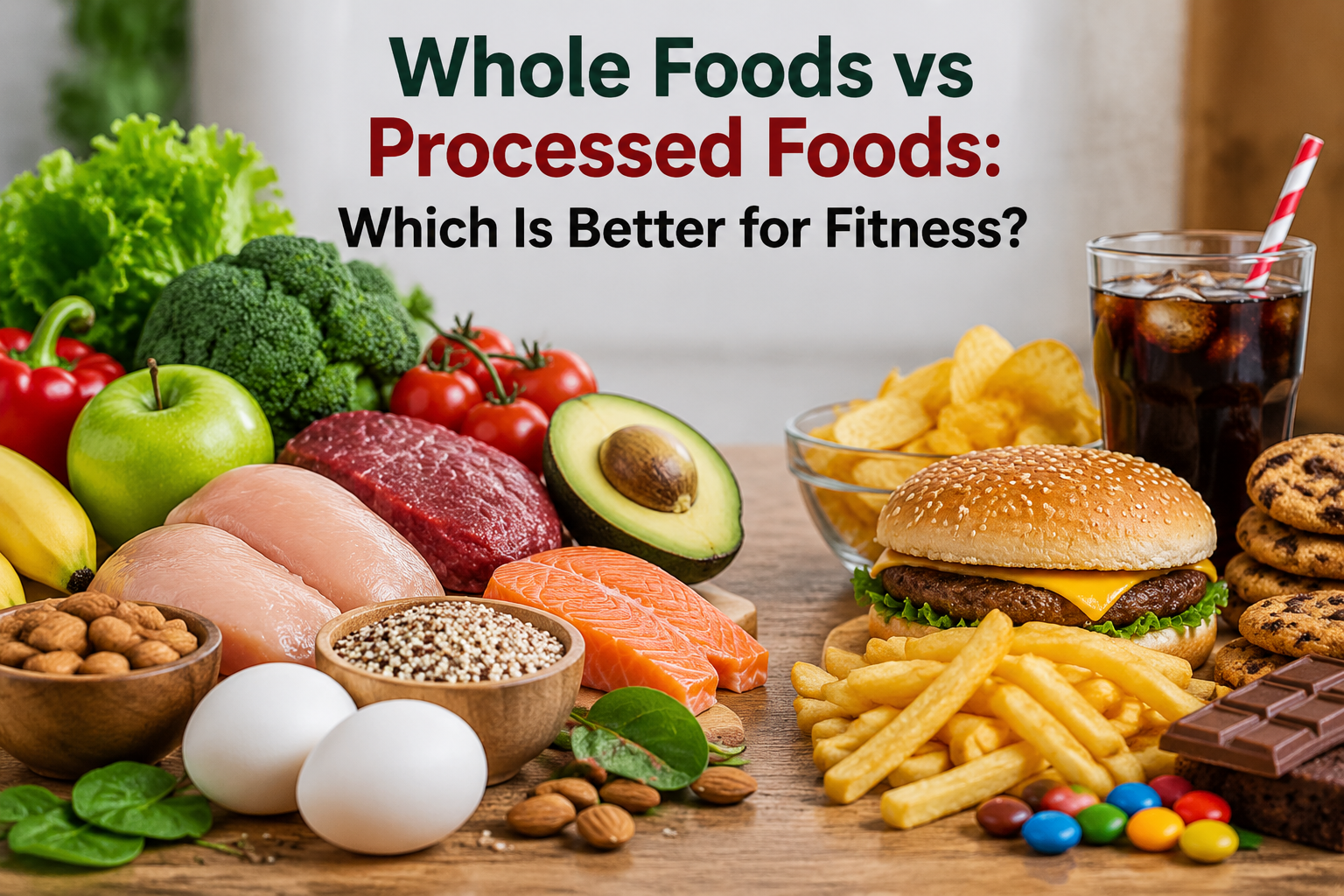
Whole foods are natural foods that are close to their original form. They are usually not heavily changed by factories or machines. These foods provide essential nutrients such as protein, healthy fats, vitamins, minerals, fiber, and natural carbohydrates.
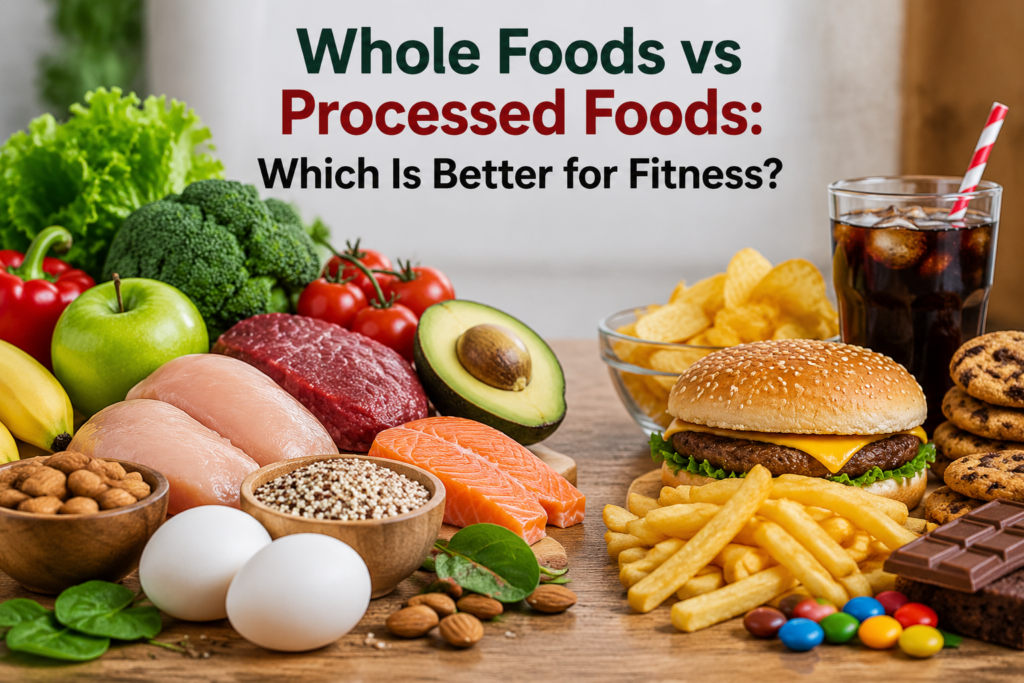
Examples of whole foods include vegetables, fruits, eggs, chicken, fish, beef, nuts, seeds, beans, lentils, whole grains, and natural dairy products.
For fitness lovers, whole foods are valuable because they provide the nutrients needed for muscle repair, energy production, and better body function. A balanced diet based on whole foods can support both strength training and daily physical activities.
For example, a person who eats grilled chicken with brown rice and vegetables receives high quality protein, complex carbohydrates, and important minerals. This combination helps the body recover after exercise and maintain steady energy.
What Are Processed Foods?
Processed foods are foods that have been changed from their natural state through preparation, packaging, or manufacturing. Some processing methods are simple, while others involve adding sugar, unhealthy fats, preservatives, and artificial ingredients.
Examples of processed foods include packaged snacks, sugary drinks, fast food, frozen meals, cookies, chips, and many ready to eat products.
Not all processed foods are harmful. Some foods such as yogurt, canned beans, frozen vegetables, and whole grain bread can still be healthy choices. The main concern is highly processed foods that contain fewer nutrients and more unhealthy ingredients.
For fitness goals, eating too many highly processed foods can make it harder to control calories, maintain healthy body weight, and achieve better workout results.
Why Whole Foods Are Better for Fitness
Whole foods provide the foundation for a strong and healthy body. They contain nutrients that work together naturally to support fitness performance.
Whole Foods Provide Better Nutrition
One of the biggest advantages of whole foods is their nutritional value. Natural foods contain a wide range of vitamins, minerals, and antioxidants that support different functions in the body.
Vegetables provide important nutrients that support immunity and recovery. Fruits provide natural carbohydrates and antioxidants. Lean meats provide protein for muscle repair. Nuts and seeds provide healthy fats that support hormones and energy.
When you choose whole foods regularly, your body receives the fuel it needs to perform better during workouts.
Whole Foods Support Muscle Growth
Protein is one of the most important nutrients for building muscle. Whole food sources such as eggs, chicken, fish, beef, lentils, and beans provide high quality protein along with other important nutrients.
After exercise, muscles need protein to repair and grow. A diet that includes enough protein from natural sources can improve recovery and support strength development.
For example, eating eggs in breakfast, chicken at lunch, and fish or beans at dinner can help meet daily protein needs naturally.
Whole Foods Improve Energy Levels
Many processed foods provide quick energy because they contain sugar and refined carbohydrates. However, this energy often disappears quickly, leaving you tired and hungry again.
Whole foods usually provide longer lasting energy because they contain fiber, protein, and healthy fats. Foods like oats, sweet potatoes, brown rice, fruits, and vegetables release energy slowly and help maintain stable blood sugar levels.
This is especially important for people who exercise regularly because consistent energy improves workout performance.
Whole Foods Help Maintain Healthy Weight
Fitness goals often include losing fat, gaining muscle, or maintaining a healthy body composition. Whole foods can make these goals easier because they are usually more filling.
Foods rich in protein and fiber help control hunger and reduce unnecessary snacking. A meal containing vegetables, lean protein, and whole grains can keep you satisfied for longer compared to a meal high in processed ingredients.
Why People Choose Processed Foods
Processed foods are popular because they are convenient, affordable, and easy to prepare. Modern lifestyles are busy, and many people do not always have time to cook fresh meals.
For example, a packaged protein bar after a workout may be easier than preparing a full meal. A frozen vegetable mix can save cooking time. These options can sometimes fit into a healthy lifestyle.
The problem begins when processed foods replace most of the natural foods in a diet.
Problems With Too Many Processed Foods
Processed Foods May Lack Important Nutrients
Many highly processed foods contain calories but provide fewer essential nutrients. They may fill your stomach but do not give your body everything it needs.
A sugary snack may provide energy for a short time, but it does not provide enough protein, vitamins, or minerals required for muscle recovery and overall health.
Processed Foods Can Increase Calorie Intake
Many processed foods are designed to taste very good, which can make people eat more than they need. Foods high in added sugar, unhealthy fats, and refined carbohydrates can quickly increase daily calorie intake.
For someone trying to lose body fat, consuming too many processed foods can slow progress even if they exercise regularly.
Processed Foods May Affect Workout Performance
Your body needs quality fuel to perform during exercise. A diet mostly based on processed foods may lead to low energy, poor recovery, and difficulty building strength.
A person who regularly eats balanced meals with whole foods usually has better energy and recovery compared to someone who depends heavily on fast food and sugary snacks.
Can Processed Foods Be Included in a Fitness Diet?
Yes, processed foods can still be included in a healthy fitness diet if consumed in moderation. Fitness is not about creating a perfect diet. It is about building sustainable habits.
For example, someone can eat mostly whole foods but still enjoy an occasional pizza, dessert, or packaged snack. The key is balance.
The majority of your diet should come from nutritious foods that support your goals. Small amounts of processed foods can fit into your lifestyle without destroying your progress.
Whole Foods vs Processed Foods for Muscle Building
When the goal is muscle growth, whole foods usually have a clear advantage. Building muscle requires enough protein, calories, and nutrients.
Foods such as chicken breast, eggs, fish, lean beef, Greek yogurt, beans, and lentils provide protein needed for muscle repair. Combining these foods with carbohydrates like rice, oats, and potatoes gives the body energy for intense workouts.
Processed foods may help increase calories, but relying on them alone can lead to poor nutrition quality.
Whole Foods vs Processed Foods for Weight Loss
For weight loss, whole foods are often the better choice because they help control hunger. Vegetables, fruits, lean proteins, and whole grains provide more volume and nutrients with fewer unnecessary calories.
A healthy weight loss diet should focus on foods that keep you full and provide enough energy for exercise.
Replacing sugary drinks, fast food, and packaged snacks with natural alternatives can make a big difference in achieving fitness goals.
How to Create a Balanced Fitness Diet
A successful fitness diet does not need to be complicated. A simple approach is to build meals around whole foods.
Include a source of protein in every meal, such as eggs, chicken, fish, meat, dairy, or plant based proteins. Add vegetables and fruits for vitamins and minerals. Choose healthy carbohydrates like oats, rice, potatoes, and whole grains. Include healthy fats from nuts, seeds, and olive oil.
Drink enough water and avoid making processed foods the main part of your daily eating routine.
Final Thoughts
When comparing whole foods vs processed foods for fitness, whole foods are the clear winner because they provide better nutrition, support muscle growth, improve energy, and help maintain a healthy body.
Processed foods are not completely forbidden, but they should not become the foundation of your diet. The best fitness results come from consistent healthy choices, regular exercise, and a balanced approach to nutrition.
Your body needs quality fuel to become stronger. Choosing more whole foods every day is one of the smartest steps you can take toward better fitness, improved health, and long term success.