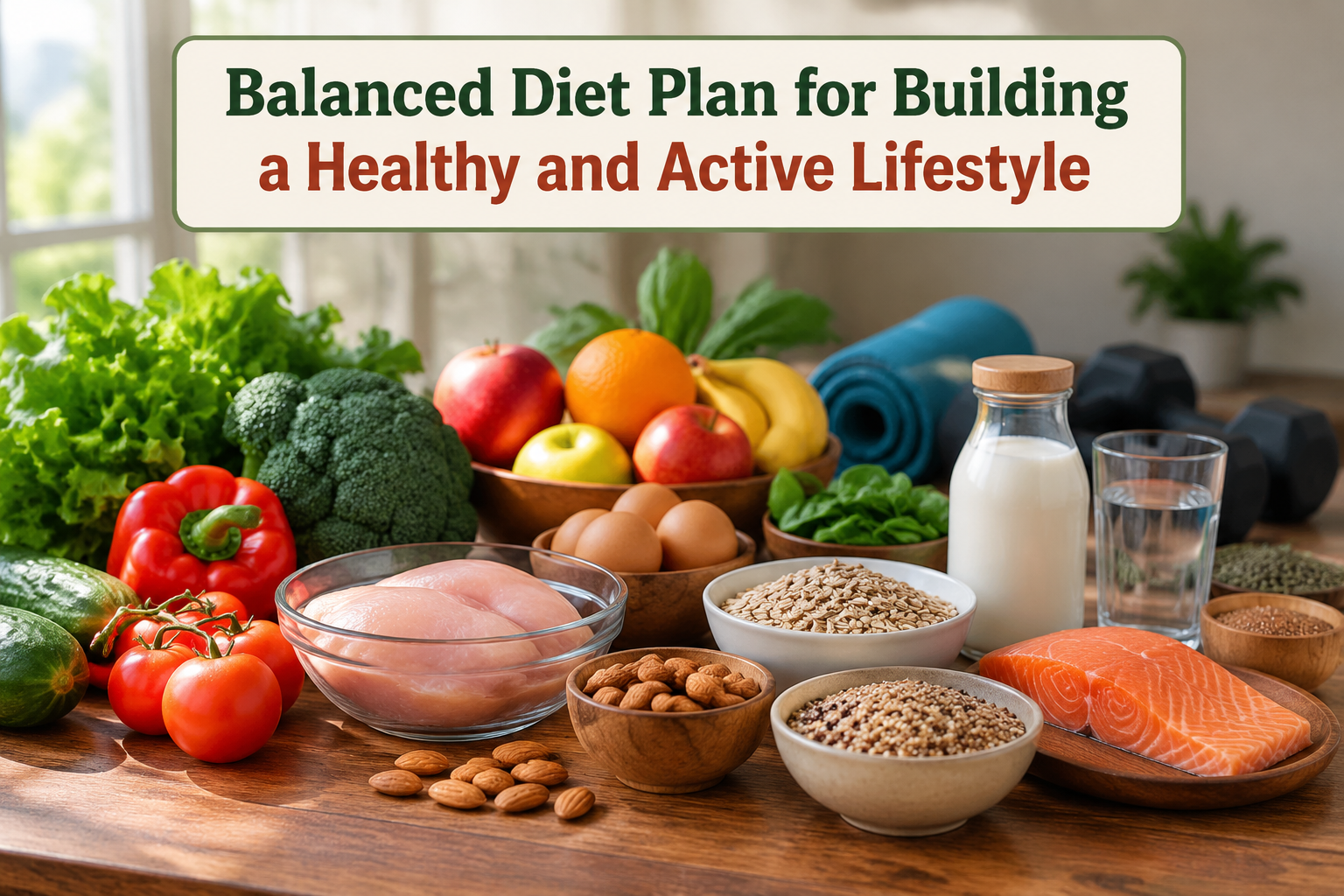
A balanced diet plan is one of the most important foundations for building a healthy and active lifestyle. The food we eat every day directly affects our energy levels, body strength, mental focus, and overall well being. Many people think that a healthy diet means eating less food or following strict rules, but the real purpose of a balanced diet is to provide the body with all essential nutrients in the right amounts. A good diet includes a variety of foods such as vegetables, fruits, proteins, whole grains, healthy fats, and enough water to keep the body active and strong.
In today’s busy life, maintaining a healthy eating routine can be challenging. People often depend on processed foods, sugary drinks, and fast meals because they are convenient. However, these choices may provide temporary satisfaction but can negatively affect health over time. A balanced diet plan helps the body receive the nutrition it needs to perform daily activities, improve immunity, support muscle growth, and maintain a healthy weight.
A healthy and active lifestyle does not require expensive foods or complicated meal plans. Simple natural foods prepared with care can provide excellent nutrition. Understanding the importance of different food groups and creating a proper eating routine can make a significant difference in your physical and mental health.
What Is a Balanced Diet Plan?
A balanced diet plan is a daily eating pattern that provides all essential nutrients required by the body. These nutrients include carbohydrates, proteins, fats, vitamins, minerals, fiber, and water. Each nutrient has a specific role in maintaining body functions.
Carbohydrates are the main source of energy and help the body perform physical activities. Foods such as brown rice, whole wheat bread, oats, and fruits provide healthy carbohydrates. Protein is necessary for muscle repair, growth, and maintaining body tissues. Common protein sources include chicken, fish, eggs, beef, mutton, beans, lentils, and dairy products.
Healthy fats are also important because they support brain function, hormone production, and energy storage. Sources of healthy fats include nuts, seeds, olive oil, and avocados. Vitamins and minerals from vegetables and fruits help strengthen the immune system and support different body processes.
A balanced diet does not mean avoiding certain foods completely. It means choosing healthy options most of the time and maintaining proper portion sizes.
Importance of a Balanced Diet for a Healthy Lifestyle
A balanced diet plays a major role in keeping the body healthy and active. When the body receives proper nutrition, it works more efficiently and has better energy throughout the day.
One of the biggest benefits of a balanced diet is improved energy. Nutrient rich foods provide steady energy instead of the short energy boost followed by tiredness that often comes from sugary snacks. People who follow a healthy diet usually feel more active and productive.
A balanced diet also supports a strong immune system. Foods rich in vitamins and minerals help the body fight infections and recover faster from illness. Vegetables, fruits, and protein rich foods provide important nutrients that protect overall health.
Another important benefit is maintaining a healthy weight. A balanced diet helps control calorie intake while providing essential nutrition. Unlike extreme diets, a healthy eating plan can be followed for a long time without causing weakness or nutritional problems.
Essential Food Groups in a Balanced Diet Plan
A successful balanced diet plan includes different food groups because each group provides unique benefits.
Vegetables and Fruits
Vegetables and fruits are important parts of a healthy diet because they contain vitamins, minerals, antioxidants, and fiber. Green vegetables such as spinach, broccoli, and lettuce provide important nutrients that support body functions.
Fruits such as apples, bananas, oranges, and berries provide natural sweetness along with vitamins and minerals. Eating a variety of colorful vegetables and fruits ensures that the body receives different nutrients.
Fiber from vegetables and fruits also supports digestion and helps maintain a healthy digestive system. Regular intake of fiber can improve gut health and keep the body comfortable.
Protein Rich Foods
Protein is essential for building and repairing muscles. People who exercise regularly especially need enough protein to support recovery and strength.
Animal based protein sources include chicken, fish, eggs, beef, and dairy products. Plant based sources include lentils, beans, chickpeas, and nuts.
Including protein in every meal can help maintain muscle mass, improve fullness after meals, and support an active lifestyle.
Whole Grains
Whole grains are an excellent source of long lasting energy. Unlike refined grains, whole grains contain more fiber and nutrients.
Foods such as brown rice, whole wheat bread, oats, and barley are healthy choices. They provide energy for daily activities and support better digestion.
Healthy Fats
Many people avoid fats completely because they think all fats are harmful. However, healthy fats are necessary for good health.
Nuts, seeds, olive oil, and fish contain healthy fats that support heart health and brain function. The key is choosing healthy fats and consuming them in moderate amounts.
Water and Hydration
Water is often ignored when discussing a balanced diet, but it is one of the most important parts of healthy living. The body needs water for digestion, temperature control, circulation, and energy production.
Drinking enough water daily helps maintain physical performance and prevents dehydration. Active people especially need proper hydration because exercise increases water loss through sweat.
Creating a Daily Balanced Diet Plan
Creating a balanced diet plan does not have to be difficult. A simple routine can help you make healthier choices every day.
Breakfast should provide enough energy to start the day. A healthy breakfast can include eggs, whole grain bread, oatmeal, fruits, yogurt, or nuts. Avoiding breakfast may lead to low energy and unhealthy snacking later.
Lunch should contain a combination of protein, vegetables, and healthy carbohydrates. A meal with chicken, vegetables, and brown rice or whole wheat roti can provide balanced nutrition.
Dinner should be lighter but still nutritious. Include protein, vegetables, and a moderate amount of carbohydrates. Avoid eating heavy processed foods late at night because they may affect digestion.
Healthy snacks between meals can help control hunger. Good snack options include fruits, nuts, yogurt, boiled eggs, or homemade healthy snacks.
Balanced Diet for Fitness and Exercise
People who follow an active lifestyle need proper nutrition to support their fitness goals. Exercise uses energy, and the body requires nutrients to recover and become stronger.
Before exercise, eating a small meal containing carbohydrates can provide energy. Foods such as bananas, oats, or whole grain toast are good choices.
After exercise, protein rich foods help repair muscles. A meal containing eggs, chicken, fish, or dairy products can support recovery.
A balanced diet combined with regular exercise improves strength, endurance, and overall fitness.
Common Mistakes in Healthy Eating
Many people struggle with healthy eating because of common mistakes. One mistake is focusing only on one type of food. For example, eating only protein while ignoring vegetables and carbohydrates can create nutritional imbalance.
Another mistake is following very strict diets that are difficult to maintain. A healthy lifestyle should be realistic and enjoyable.
Skipping meals is another common problem. Missing meals can reduce energy levels and increase cravings for unhealthy foods.
People should also avoid depending too much on packaged health products. Natural foods are usually the best source of nutrition.
Tips for Following a Balanced Diet Plan Successfully
Building healthy eating habits requires consistency. Small changes can create long term results.
Plan your meals in advance to avoid unhealthy choices. Keep fruits, vegetables, and healthy snacks available at home.
Try to cook more meals at home because homemade food allows better control over ingredients and portion sizes.
Eat slowly and pay attention to hunger signals. This helps prevent overeating.
Maintain variety in your meals. Eating different foods makes your diet more enjoyable and provides a wider range of nutrients.
Conclusion
A balanced diet plan is the key to building a healthy and active lifestyle. It provides the body with essential nutrients, improves energy levels, supports fitness goals, and helps maintain overall health. A healthy diet is not about temporary restrictions but about creating better food choices that can become a part of daily life.
By including vegetables, fruits, proteins, whole grains, healthy fats, and enough water, anyone can develop a strong foundation for better health. Combined with regular physical activity, proper sleep, and positive habits, a balanced diet can help you enjoy a more energetic and productive life.
The journey toward better health starts with simple decisions. Choosing nutritious foods today can create a healthier and stronger future. A balanced diet plan is not just a way of eating; it is a lifestyle choice that supports long term wellness and happiness.