Achieving fitness goals is not only about spending hours in the gym or following a strict workout routine. The food you eat every day plays a major role in building strength, improving energy, losing fat, and maintaining a healthy body. Many people work hard during exercise but still fail to see the results they expect because of common diet mistakes that slow down their fitness progress.
A balanced diet provides the fuel your body needs to perform better, recover faster, and develop healthy muscles. However, many fitness lovers unknowingly make eating mistakes that prevent them from reaching their goals. Some people eat too little, some focus on the wrong foods, and others follow unrealistic diets that cannot be maintained for a long time.
Understanding these mistakes can help you create better eating habits and improve your overall fitness journey. A successful fitness diet does not require extreme restrictions. It requires consistency, proper nutrition, and smart food choices.
Skipping Meals and Not Eating Enough Food
One of the most common diet mistakes that stop fitness progress is skipping meals. Many people believe that eating fewer meals will help them lose weight faster. However, when you do not provide enough energy to your body, your workout performance can decrease.
Your body needs calories from healthy foods to support daily activities, exercise, and muscle recovery. Eating too little can make you feel tired, reduce your strength, and slow down your metabolism.
For people who want to build muscle, insufficient food intake can become a major problem because muscles require enough calories and nutrients to grow. Even if you exercise regularly, your body cannot properly repair muscles without proper nutrition.
Instead of skipping meals, focus on eating balanced portions throughout the day. Include protein sources, healthy carbohydrates, vegetables, fruits, and good fats to support your fitness goals.
Not Eating Enough Protein
Protein is one of the most important nutrients for fitness and muscle development. A common mistake many people make is not consuming enough protein in their daily diet.
Protein helps repair damaged muscle tissues after exercise and supports muscle growth. Without enough protein, your body may struggle to recover after workouts, which can slow down progress.
Many people only focus on protein when they start going to the gym, but protein is important for everyone who wants better health and fitness. Foods such as eggs, chicken, fish, beef, mutton, yogurt, beans, lentils, and nuts are excellent sources of protein.
Adding protein to each meal can help you feel full for longer, maintain muscle mass, and improve recovery after physical activity.
Depending Too Much on Processed Foods
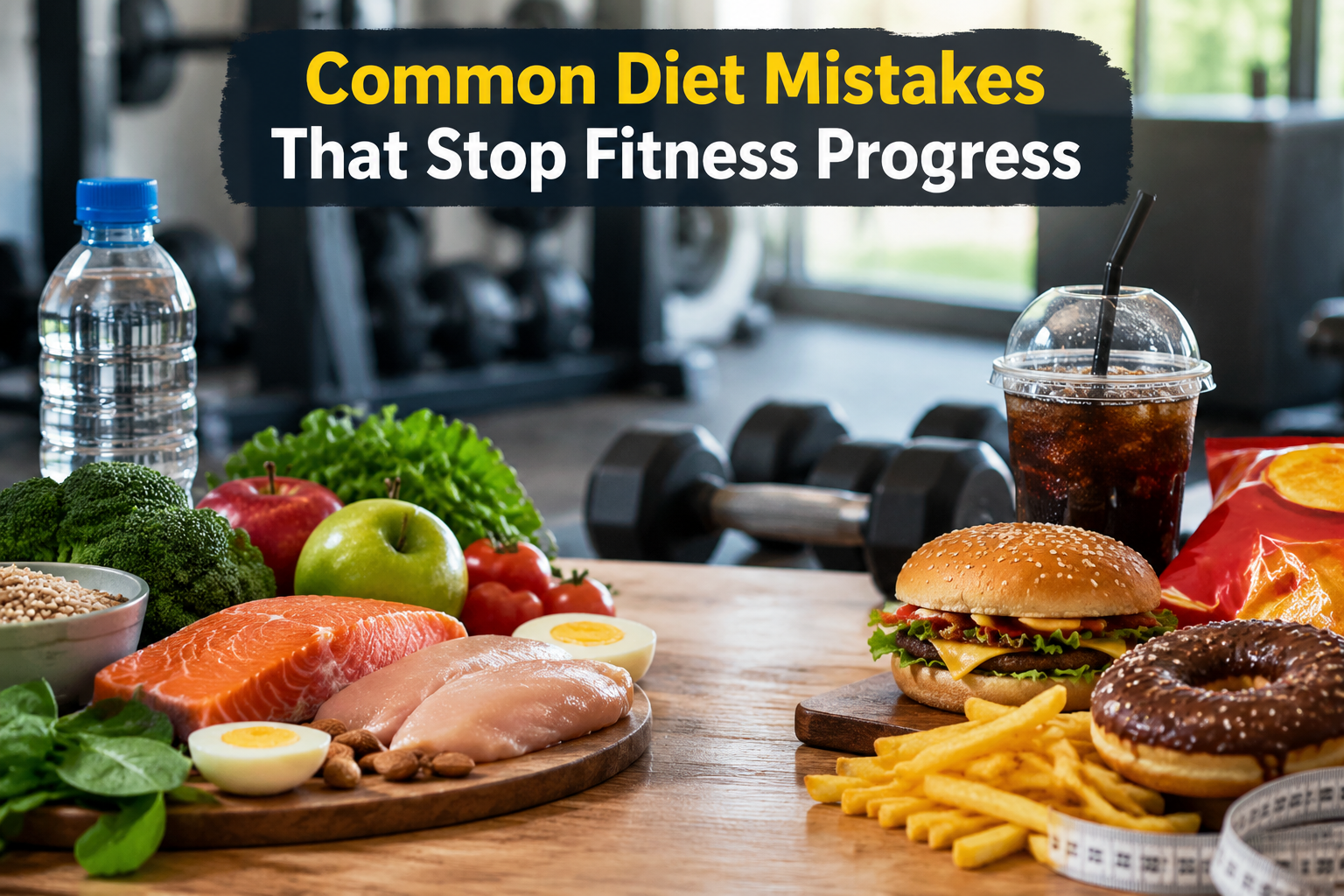
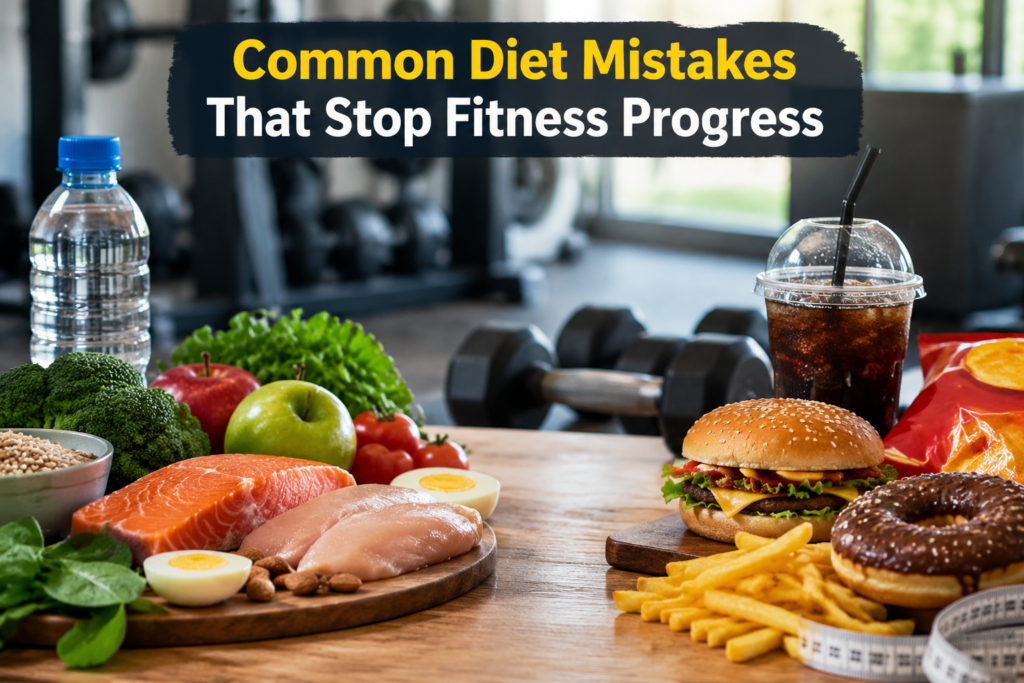
Another major diet mistake is eating too many processed foods. Packaged snacks, sugary drinks, fast food, and highly processed meals may taste good, but they often contain high amounts of sugar, unhealthy fats, and unnecessary calories.
These foods can make it difficult to achieve fitness goals because they provide less nutrition compared to whole foods. Your body needs vitamins, minerals, fiber, and quality nutrients to perform well.
Whole foods such as vegetables, fruits, lean meats, whole grains, and natural dairy products provide better support for energy and recovery.
This does not mean you can never enjoy your favorite foods. A healthy diet should be flexible. The key is maintaining balance and making nutritious foods the foundation of your eating habits.
Ignoring Carbohydrates Completely
Many people believe carbohydrates are harmful and remove them completely from their diet. This is one of the biggest misunderstandings in fitness nutrition.
Carbohydrates are the main source of energy for your body, especially during intense workouts. When you reduce carbohydrates too much, you may experience low energy, poor exercise performance, and difficulty maintaining your routine.
Healthy carbohydrate sources include oats, brown rice, potatoes, sweet potatoes, fruits, vegetables, and whole grains. These foods provide energy that helps you perform better during training.
The goal is not to avoid carbohydrates but to choose the right types and consume them in appropriate amounts according to your fitness goals.
Drinking Too Little Water
Hydration is often ignored, but water plays a critical role in fitness progress. Many people focus on food and exercise but forget that their body needs enough fluids to function properly.
Water helps transport nutrients, regulate body temperature, support digestion, and improve physical performance. Even mild dehydration can reduce energy levels and make workouts feel harder.
Drinking enough water throughout the day supports better recovery and helps your body work efficiently. People who exercise regularly should pay extra attention to their water intake because they lose fluids through sweating.
Making water a daily habit is a simple step that can improve your health and fitness results.
Following Extreme Diet Plans
Extreme diets may promise fast results, but they are usually difficult to maintain and can negatively affect your health. Many people follow very low calorie diets or remove entire food groups because they want quick changes.
The problem with extreme diets is that they often create temporary results. Once people return to normal eating habits, they may regain lost weight because the diet was not realistic.
A successful fitness diet should be something you can follow for months and years. Sustainable progress comes from small improvements, balanced meals, and consistent habits.
Instead of searching for quick solutions, focus on creating a healthy lifestyle that supports your long term goals.
Eating Too Many Calories Without Realizing It
While eating enough calories is important, consuming too many calories can also stop fitness progress. Many people underestimate how much they eat during the day.
Healthy foods can also contain calories, and eating large portions without tracking your intake can slow fat loss.
For example, nuts, oils, smoothies, and high calorie snacks can be nutritious but may increase total calories quickly.
Understanding portion sizes and paying attention to your daily food intake can help you maintain better control over your fitness goals.
Not Eating Enough Fruits and Vegetables
Fruits and vegetables are essential parts of a healthy fitness diet. However, many people focus only on protein and ignore these important foods.
Vegetables provide fiber, vitamins, minerals, and antioxidants that support digestion, immunity, and overall health. Fruits provide natural energy and important nutrients that help your body recover.
A colorful plate with different vegetables and fruits can improve the quality of your diet and support better fitness results.
Adding foods like spinach, broccoli, carrots, tomatoes, apples, bananas, and berries can make your meals more nutritious.
Eating Too Much Sugar
Excess sugar intake is another common diet mistake that affects fitness progress. Sugary drinks, desserts, and sweet snacks can add many unnecessary calories without providing important nutrients.
High sugar consumption can cause energy fluctuations, making you feel tired and less active. It can also make it harder to maintain a healthy body composition.
Instead of relying on sugary foods for quick energy, choose natural energy sources like fruits, whole grains, and balanced meals.
Reducing added sugar does not mean completely avoiding sweetness. It means making smarter choices and enjoying treats occasionally.
Not Planning Meals Properly
Lack of meal planning can lead to poor food choices. When people become busy, they often choose convenient foods that may not support their fitness goals.
Planning your meals in advance helps you make better decisions and ensures that healthy options are available when you need them.
A simple meal plan can include protein at every meal, vegetables, healthy carbohydrates, and enough water throughout the day.
Preparation does not need to be complicated. Even basic planning can help you stay consistent and avoid unhealthy choices.
Ignoring Recovery Nutrition
Many people focus on what they eat before exercise but forget the importance of post workout nutrition. After training, your body needs nutrients to repair muscles and restore energy.
Eating a balanced meal after exercise can improve recovery and prepare your body for future workouts.
A good post workout meal may include protein and carbohydrates, such as chicken with rice, eggs with whole grain bread, or yogurt with fruits.
Recovery nutrition is an important part of achieving better fitness results.
Comparing Your Diet With Others
Everyone has a different body type, lifestyle, metabolism, and fitness goal. A diet that works for one person may not work for another.
A common mistake is copying someone else’s diet without understanding your own needs. This can lead to frustration and poor results.
Instead of following trends blindly, focus on creating a nutrition plan that fits your personal goals, activity level, and preferences.
Consistency with a suitable diet is more important than following a perfect diet.
Conclusion
Fitness progress depends on many factors, but diet is one of the most important parts of success. Avoiding common diet mistakes can help you improve your energy, strength, recovery, and overall health.
Eating enough quality food, including proper protein, choosing whole foods, staying hydrated, and following a balanced approach can make a big difference in your fitness journey.
There is no need for extreme diets or unrealistic restrictions. The best fitness diet is one that you can maintain consistently while enjoying healthy and nutritious foods.
By understanding your body’s needs and making better food choices every day, you can move closer to your fitness goals and build a stronger, healthier lifestyle.