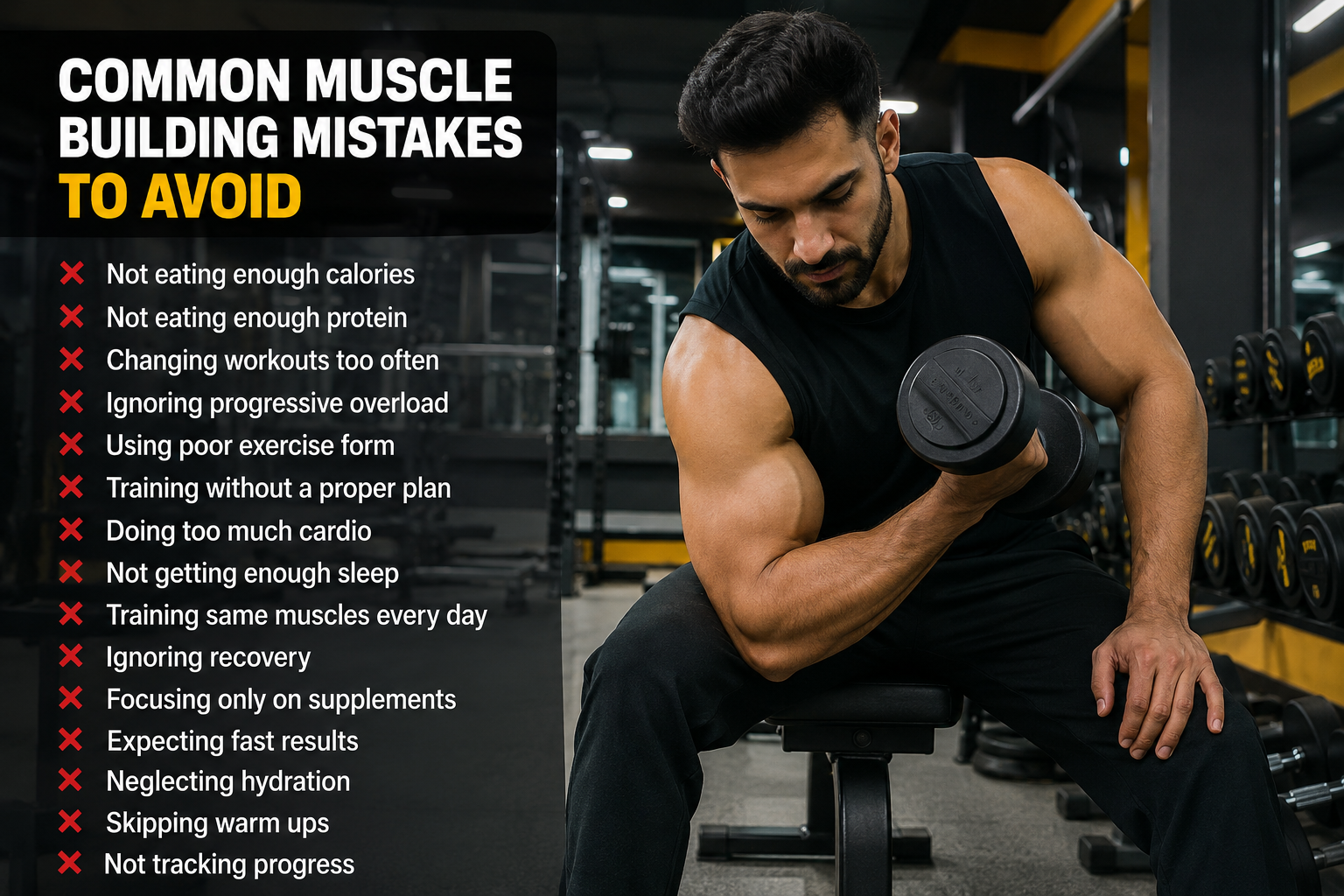

Building muscle is not only about lifting heavy weights and spending long hours in the gym. Many people focus completely on workouts and forget one of the most important parts of muscle growth, which is rest and recovery. Your muscles need proper recovery after training so they can repair themselves, become stronger, and grow over time.
If you want to build muscle naturally and improve your strength, understanding the importance of rest and recovery can make a major difference. A well planned workout routine should always include enough sleep, rest days, proper nutrition, hydration, and recovery time.
Why Rest Is Important for Muscle Growth
When you perform strength training exercises, your muscles experience small amounts of stress and damage. This is a normal part of exercise and is one reason why your muscles may feel tired or sore after a workout.
Muscle growth happens when your body repairs this muscle tissue. During recovery, the body works to rebuild the muscles and prepare them for future physical stress. Over time, this process can help your muscles become larger and stronger.
Without enough recovery, your body may not have enough time to repair the muscle tissue properly. This can make your workouts less effective and may increase tiredness and the risk of injury.
This is why rest and recovery are essential parts of any muscle building plan.
The Connection Between Sleep and Muscle Growth
Sleep is one of the most important forms of recovery. While you sleep, your body performs many important processes that support muscle repair and physical recovery.
During deep sleep, the body releases hormones that support tissue repair and recovery. Good quality sleep can also help restore energy, improve mental focus, and prepare your body for the next workout.
Most adults should aim for around seven to nine hours of quality sleep each night. People who train regularly may benefit from paying extra attention to their sleep because intense exercise can increase the body’s recovery needs.
A regular sleep schedule can also make it easier to maintain healthy recovery habits. Going to bed and waking up at similar times each day may help support better sleep quality.
Rest Days Help Your Muscles Recover
Taking a rest day does not mean you are losing progress. In fact, rest days can help you make better progress in the long term.
When you train the same muscle group repeatedly without enough recovery, your muscles may remain tired and your performance can decrease. Rest days give your muscles time to recover before they are challenged again.
A good workout routine can include rest days depending on your training frequency and fitness goals. Some people may train several days in a row and then take a full rest day, while others may use different muscle groups on different days.
For example, you might train your chest and shoulders on one day, your back and arms on another day, and your legs on a separate day. This approach can allow one muscle group to recover while another group is being trained.
Recovery and Muscle Protein Synthesis
Muscle protein synthesis is an important process involved in muscle repair and growth. After resistance training, your body increases the process of building and repairing muscle proteins.
Proper nutrition and recovery work together to support this process. Protein provides amino acids that the body uses to repair and build muscle tissue.
If you exercise regularly but do not eat enough nutritious food or allow enough recovery time, your muscle building results may be limited.
This is why muscle growth should not be viewed as something that happens only during exercise. Training provides the stimulus, while nutrition and recovery help your body respond to that stimulus.

Nutrition Supports Recovery
Food plays a major role in muscle recovery. After exercise, your body needs nutrients to restore energy and repair muscle tissue.
Protein is especially important for people who want to build muscle. Good protein sources include eggs, chicken, fish, milk, yogurt, beans, lentils, cottage cheese, and other protein rich foods.
Carbohydrates are also useful because they help replenish energy stores after training. Healthy fats provide additional energy and support many important body functions.
A balanced diet that includes protein, carbohydrates, healthy fats, fruits, vegetables, and whole foods can provide the nutrients needed for effective recovery.
You do not need an expensive diet to support muscle growth. Simple nutritious foods can be enough when your overall diet is balanced and consistent.
Hydration and Muscle Recovery
Water is another important part of recovery. Your body depends on water for many processes, including temperature regulation and normal physical performance.
During exercise, you lose water through sweating. If you do not replace enough fluids, dehydration can affect your energy and workout performance.
Drinking water throughout the day and increasing your fluid intake when you sweat heavily can help support proper hydration.
You should also pay attention to your body’s signals. Feeling very thirsty, having dark colored urine, or feeling unusually tired may indicate that you need more fluids.
Active Recovery Can Help
Rest does not always mean sitting completely still. Active recovery can be useful between harder workouts.
Active recovery involves low intensity activities such as walking, gentle cycling, stretching, or light mobility exercises. These activities can help you stay active without placing heavy stress on your muscles.
For example, if you complete a demanding leg workout, a gentle walk on the following day may be more appropriate than another intense leg session.
The goal of active recovery is to keep movement light and comfortable. It should not become another hard workout.
Signs That You Need More Recovery
Your body can give you several signals when you are not recovering properly. Constant muscle soreness, unusual tiredness, poor workout performance, lack of motivation, difficulty sleeping, and feeling weaker than usual can all be signs that you may need more recovery.
Training harder is not always the answer. Sometimes the best decision is to reduce training intensity or take an additional rest day.
Listening to your body can help you avoid unnecessary fatigue and maintain a more consistent workout routine.
Avoid Overtraining
Overtraining can happen when you repeatedly train at a high intensity without giving your body enough time to recover. While serious overtraining is different from normal workout fatigue, consistently ignoring recovery can still negatively affect your progress.
Some people believe that more exercise always means faster muscle growth. This is not necessarily true.
Muscles need an appropriate balance between training and recovery. If you constantly push yourself without adequate rest, your performance may suffer.
A smart muscle building program should focus on quality workouts rather than simply doing more workouts.
How to Improve Muscle Recovery
There are several simple habits that can improve muscle recovery.
First, make sleep a priority and aim for consistent, quality sleep each night. Second, eat enough nutritious food and include a good source of protein in your meals. Third, drink enough water throughout the day. Fourth, schedule regular rest days according to your training routine.
You can also use stretching and mobility exercises to maintain comfortable movement. Light walking can be useful on recovery days, especially if you spend a lot of time sitting.
Most importantly, avoid changing your workout program too frequently. Give your body enough time to adapt and improve.
Rest and Recovery for Beginners
Beginners often make the mistake of training too much because they are excited about getting results quickly. However, starting with a manageable workout routine is usually a better approach.
Your muscles may need more recovery when you are new to strength training because your body is adapting to a new type of physical stress.
Start with a reasonable number of training sessions and focus on proper exercise technique. Gradually increase your training intensity as your fitness improves.
Remember that muscle growth takes time. Consistency is more important than trying to achieve results overnight.
Final Thoughts
Rest and recovery are essential for muscle growth. Strength training provides the challenge that encourages your muscles to adapt, but recovery gives your body the opportunity to repair and rebuild.
Getting enough sleep, eating a balanced diet, drinking enough water, taking rest days, and paying attention to signs of fatigue can all support better muscle recovery.
If your goal is to build muscle and become stronger, do not think of rest as wasted time. Rest is part of the process. A successful muscle building routine is not only about how hard you train but also about how well you recover.
By creating a healthy balance between exercise, nutrition, sleep, and recovery, you can support steady progress and build a stronger body over time.