Finding time to exercise can be difficult when you have a busy job, family responsibilities, studies, or other daily commitments. Many people believe they need to spend an hour or more at the gym to get good results. The truth is that a well planned full body workout routine can help you stay active, build strength, improve fitness, and support your health even when you have limited time.
A full body workout routine is especially useful for busy people because it allows you to train several major muscle groups in one session. Instead of spending different days training only one body part, you can work your legs, chest, back, shoulders, arms, and core together. With consistency and proper exercise selection, even short workouts can become an important part of a healthy lifestyle.
Why Choose a Full Body Workout Routine?
A full body workout routine is a practical choice for people who cannot visit the gym every day. You can train your entire body two or three times per week and still make steady progress.
One major benefit is time efficiency. When every workout includes several muscle groups, you can get more value from each exercise session. This makes full body training suitable for professionals, parents, students, and anyone with a demanding schedule.
Another benefit is improved muscle balance. Training different muscle groups regularly can help you develop overall strength instead of focusing too much on one area. Full body workouts can also support better movement, coordination, and physical performance.
How Long Should a Busy Person Workout?
You do not need a long workout to stay fit. A focused workout lasting around 30 to 45 minutes can be enough for many people. The key is to avoid wasting time and choose exercises that work multiple muscles at once.
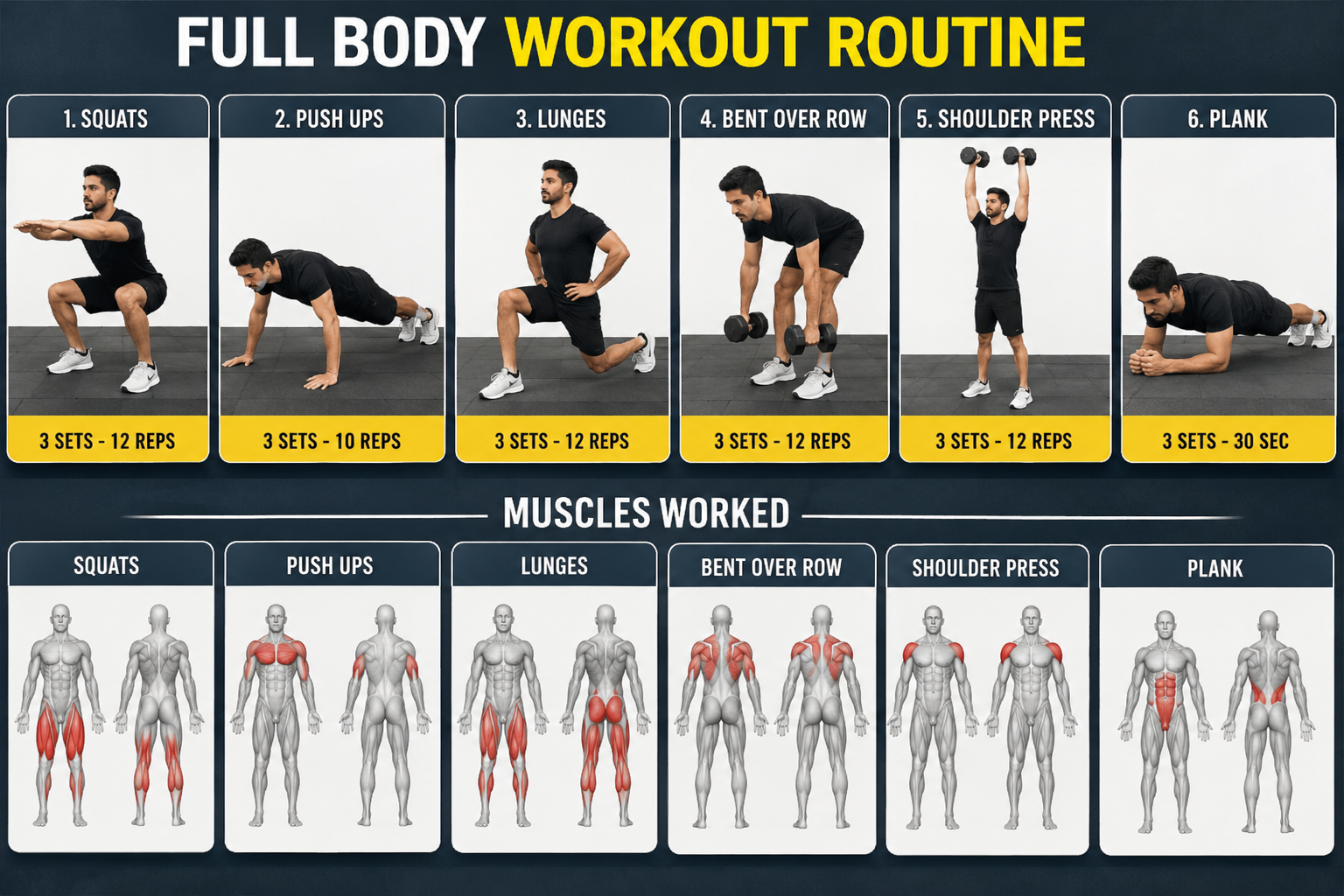
Compound exercises are particularly useful because they involve more than one muscle group. Exercises such as squats, push ups, rows, lunges, and shoulder presses can provide a strong workout without requiring a large number of individual exercises.
If you only have 20 minutes, you can still complete a shorter session. Focus on a few important movements and maintain good exercise form. A short workout that you perform consistently is often more useful than a long workout that you rarely complete.
Full Body Workout Routine for Beginners
Beginners should start with simple movements and focus on learning proper technique. The following routine can be performed at home or in a gym depending on the available equipment.
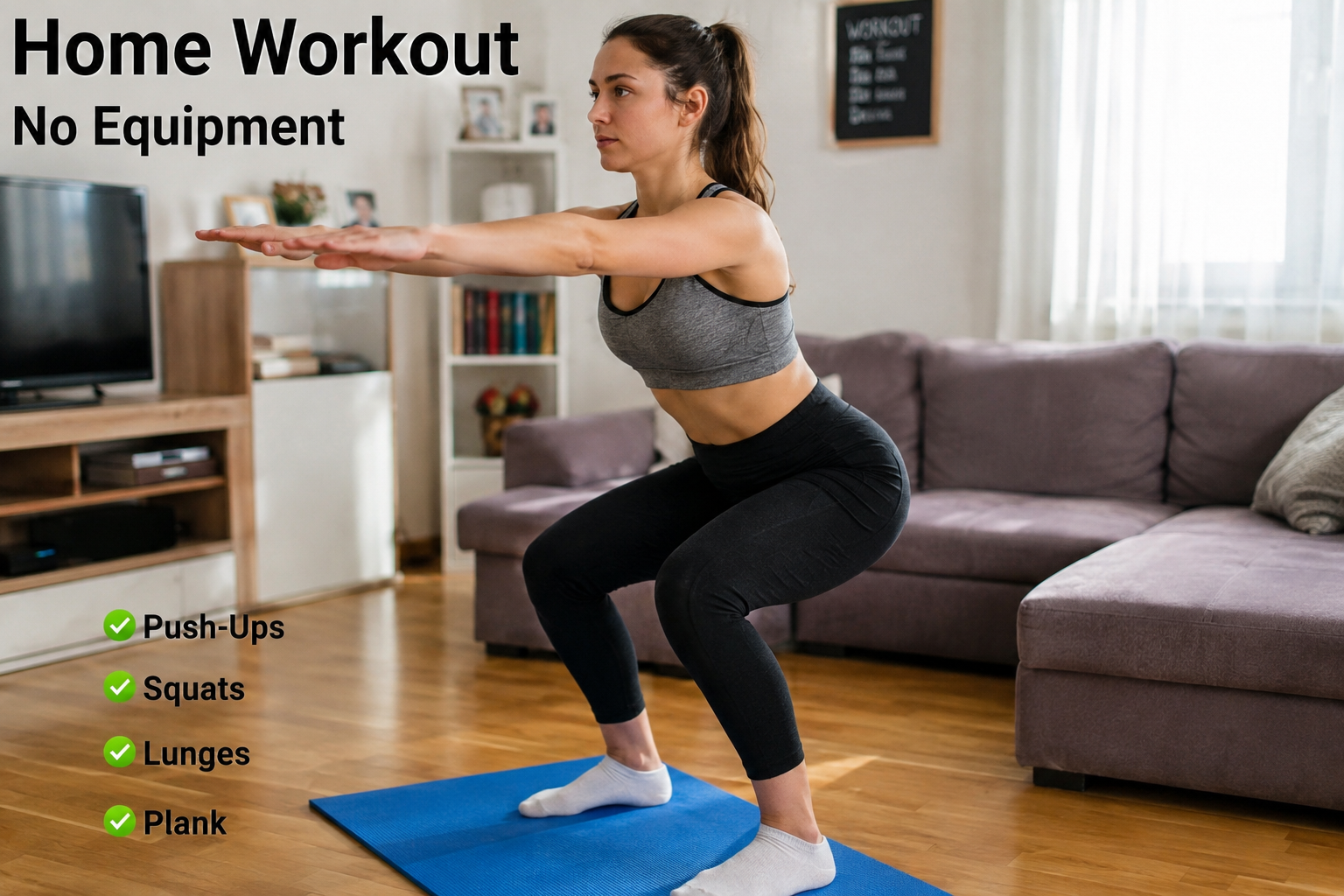
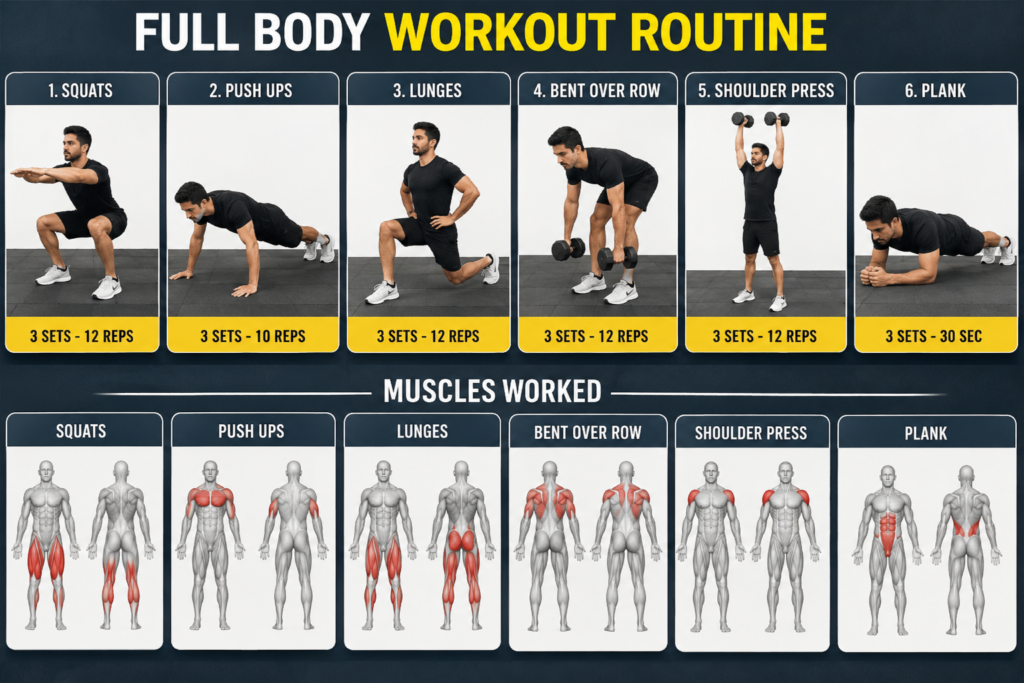
Start with bodyweight squats for 10 to 15 repetitions. Squats work the legs and hips while also engaging the core. Keep your chest comfortable and lower your body under control.
Next, perform push ups for 8 to 12 repetitions. Push ups mainly work the chest, shoulders, and triceps. If regular push ups are difficult, beginners can start with knee push ups or incline push ups.
After push ups, perform dumbbell rows for 10 to 12 repetitions on each side. This exercise targets the back and arms. If you do not have dumbbells, you can use another safe household object with a suitable weight.
Continue with reverse lunges for 8 to 10 repetitions on each leg. Lunges help strengthen the legs and improve balance.
Then perform a shoulder press for 10 to 12 repetitions. Use light dumbbells and focus on controlled movement.
Finish the workout with a plank. Hold the plank for around 20 to 40 seconds while keeping your body in a comfortable straight position.
Rest for around 30 to 60 seconds between exercises when needed. Beginners can complete two rounds of the routine and gradually increase to three rounds as their fitness improves.
Full Body Workout Routine for Intermediate Fitness
People who already exercise regularly can increase the challenge by adding resistance, repetitions, or additional rounds.
A useful intermediate routine can begin with goblet squats for 10 to 12 repetitions. Follow them with dumbbell bench presses for 8 to 12 repetitions. Next, perform bent over rows for 10 to 12 repetitions.
Continue with walking lunges for 10 repetitions on each leg. Add dumbbell shoulder presses for 8 to 12 repetitions. Finish with a core exercise such as dead bugs or planks.
Complete three rounds if your fitness level allows it. Choose a resistance that makes the final repetitions challenging while allowing you to maintain good form.
A Simple Weekly Workout Schedule
Busy people do not need to exercise every day. A simple schedule can make regular training easier to maintain.
You could perform a full body workout on Monday, Wednesday, and Friday. On the remaining days, you can focus on walking, stretching, light activity, or rest.
Another option is to exercise on Tuesday and Saturday if your weekly schedule is more demanding. The important thing is to choose days that you can realistically maintain.
Consistency matters more than creating a perfect workout schedule. A routine that fits your lifestyle is more likely to become a long term habit.
How to Save Time During Exercise
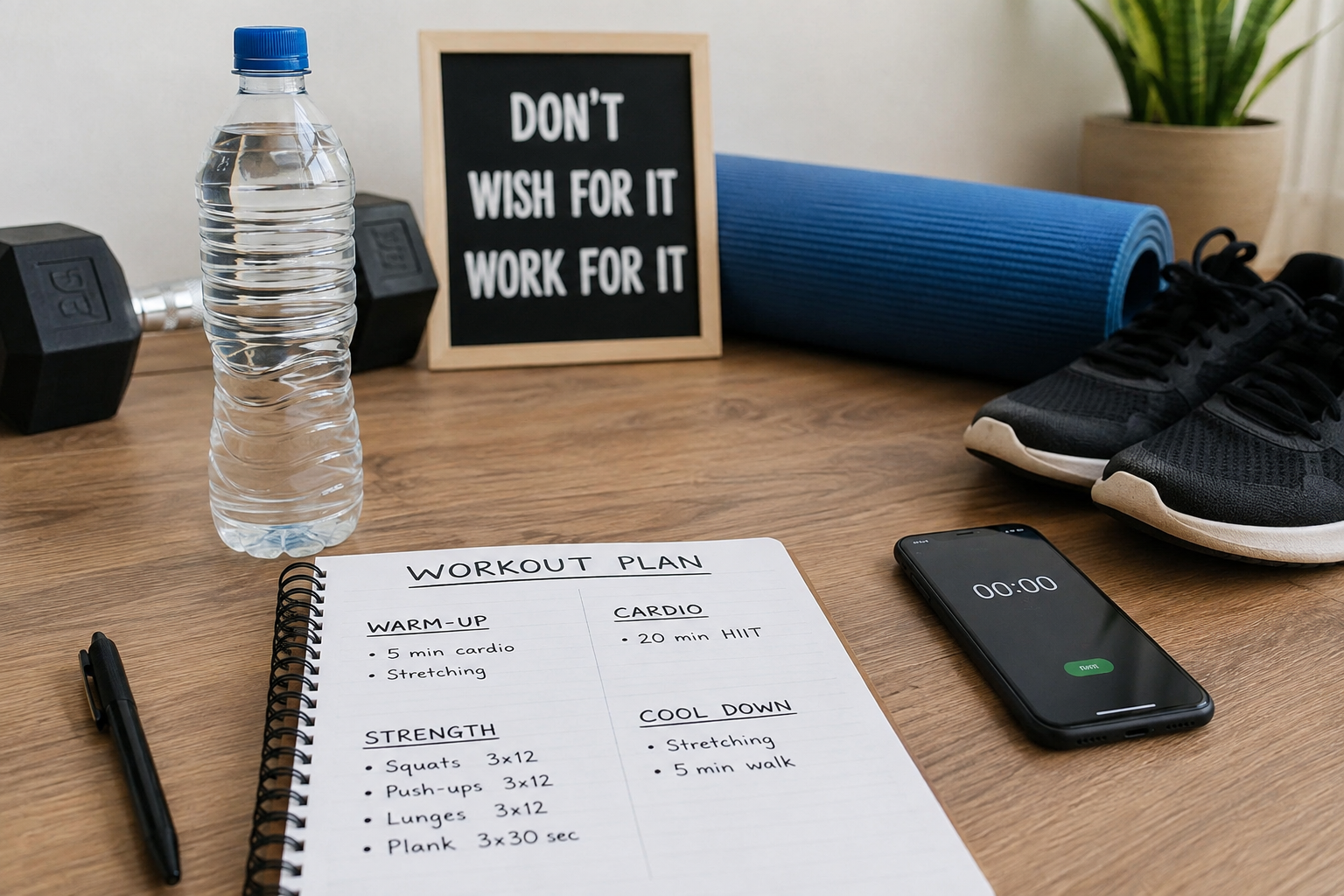
Time management is one of the most important parts of a workout for busy people. Start by preparing your workout before you begin. Know which exercises you will perform and how many sets or repetitions you want to complete.
Avoid spending too much time checking your phone between exercises. Keep your rest periods reasonable and move from one exercise to another when appropriate.
You can also combine exercises to make your workout more efficient. For example, you can perform a strength exercise followed by a core movement. However, never sacrifice proper technique just to finish faster.
If you exercise at home, keep your equipment ready. A pair of dumbbells, resistance bands, and a workout mat can be enough for many effective home workouts.
Importance of Warm Up and Cool Down
Even when you are short on time, do not completely ignore your warm up. Spend around five minutes preparing your body for exercise. You can walk in place, move your arms, perform gentle bodyweight squats, and use other comfortable movements.
A warm up can help you feel more prepared for physical activity. After your workout, spend a few minutes slowing down and doing gentle stretches if they feel comfortable.
The goal is to prepare your body before exercise and gradually return to a relaxed state afterward.
How to Make Progress
Doing the same workout forever may eventually become less challenging. To continue improving, gradually increase the difficulty of your training.
You can add a small amount of weight, perform more repetitions, add another set, or improve your exercise technique. You do not need to make major changes every week.
Pay attention to how your body responds. If an exercise becomes easy while your form remains strong, you can slowly increase the challenge. If your technique becomes poor, reduce the resistance and focus on control.
Progress takes time, so do not compare your results with someone else. Your goal should be to become stronger and fitter compared with where you started.
Nutrition and Recovery Matter Too
Exercise is only one part of staying healthy. Your body also needs enough nutritious food, water, sleep, and recovery.
Try to include a variety of foods in your daily meals, including protein sources, vegetables, fruits, whole grains, and healthy fats. Protein is especially important for people who want to support muscle growth and recovery.
Hydration is also important, particularly when you exercise in hot weather or sweat heavily. Drink water throughout the day and pay attention to your body’s needs.
Good sleep gives your body time to recover. Busy people sometimes sacrifice sleep to make more time for work or exercise, but recovery should remain an important part of your fitness routine.
Common Mistakes Busy People Should Avoid
One common mistake is trying to do too much too quickly. You do not need an extremely difficult workout to make progress. Starting with manageable sessions can help you build consistency.
Another mistake is skipping workouts whenever you have a busy day. If you cannot complete your normal 45 minute session, consider doing a shorter 15 or 20 minute workout instead.
Poor exercise form is another issue. Moving quickly or lifting too much weight can reduce the quality of your workout and increase the chance of injury. Learn the basic technique for every exercise and control your movements.
Finally, avoid expecting immediate results. Fitness improvements take time. Focus on building a routine that you can follow for months rather than searching for overnight changes.
Final Thoughts
A full body workout routine for busy people can be simple, effective, and flexible. You do not need expensive equipment or hours at the gym to improve your fitness. By choosing compound exercises, managing your workout time, and exercising consistently, you can train your major muscle groups even with a demanding schedule.
Start with two or three workouts each week and adjust the routine according to your fitness level and available time. Remember that consistency is more important than perfection. Even a short workout can move you closer to your fitness goals when you make it a regular part of your lifestyle.
The best workout routine is one that you can realistically follow. Keep your exercises simple, focus on good form, allow enough recovery, and gradually increase the challenge. With the right approach, staying fit can become possible even when life gets busy.