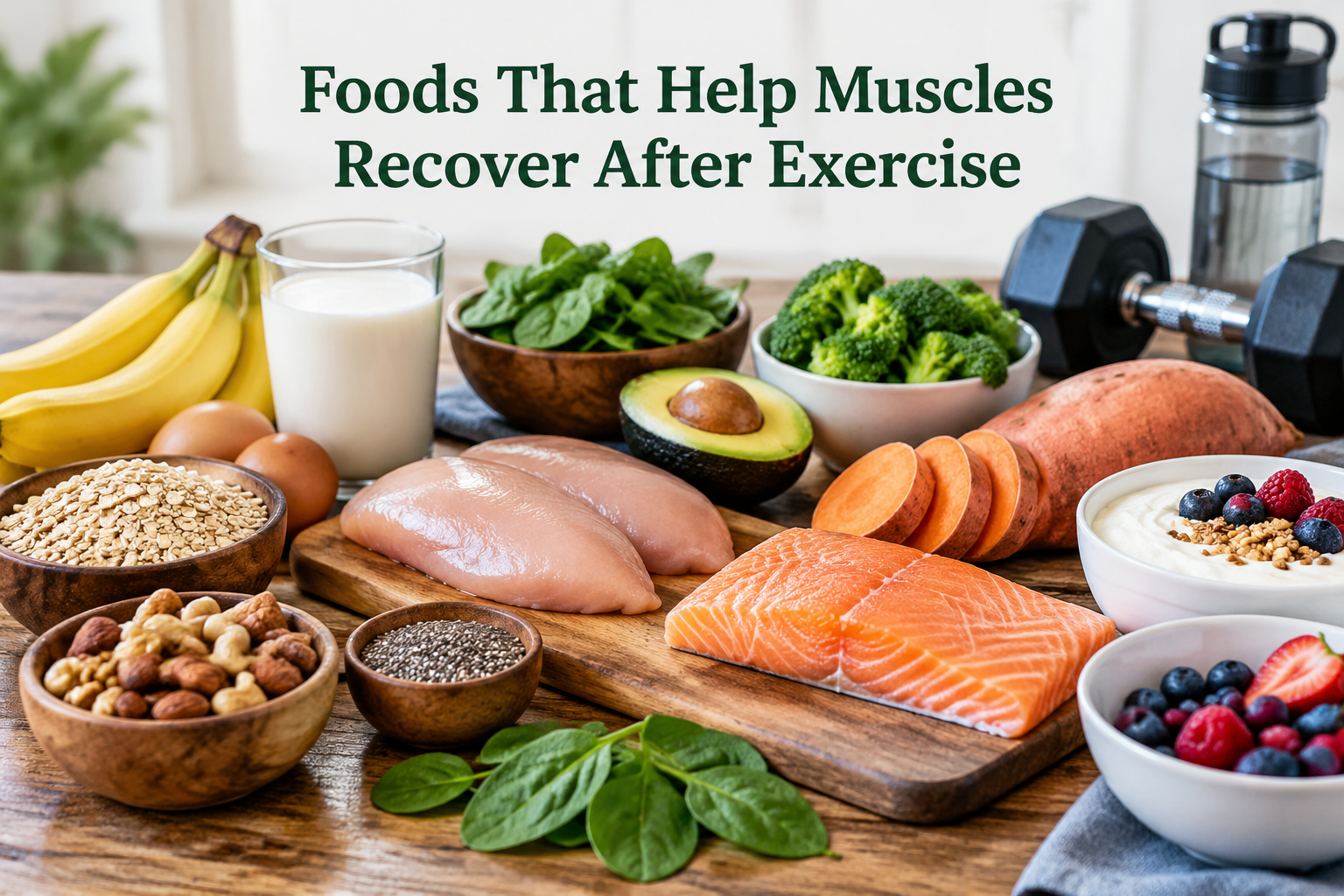
Exercise is one of the best ways to build a stronger and healthier body, but the work does not end when the workout finishes. The recovery process after exercise is just as important as the training itself. During physical activity, muscles use stored energy and experience small amounts of stress. The body needs proper nutrition to repair these muscles, restore energy levels, and prepare them for the next workout.
Choosing the right foods after exercise can improve muscle recovery, reduce tiredness, and support muscle growth. A balanced recovery meal should include enough protein, healthy carbohydrates, vitamins, minerals, and fluids. Many people focus only on protein, but the body needs a combination of nutrients to recover properly.
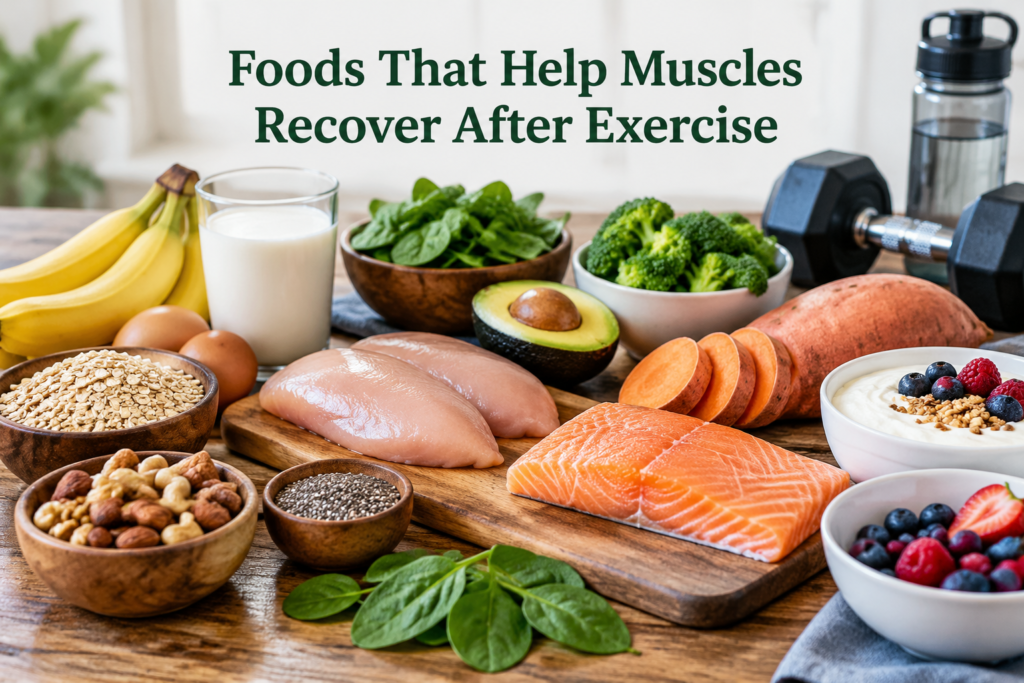
The best foods for muscle recovery are natural, nutrient rich, and easy for the body to use. From eggs and chicken to fruits, vegetables, dairy products, and whole grains, many simple foods can help your muscles heal and become stronger.
Why Nutrition Is Important After Exercise
When you exercise, especially during strength training or intense workouts, your muscles experience small tears. This is a normal process that helps muscles grow stronger when they repair themselves. However, the body needs the right nutrients to complete this repair process.
Protein provides amino acids that help rebuild damaged muscle tissue. Carbohydrates restore glycogen, which is the energy stored in muscles and used during exercise. Healthy fats support hormone production and overall health. Vitamins and minerals help many important body functions, including reducing stress caused by exercise.
Eating the right foods after exercise can also prevent excessive muscle soreness and help you maintain energy for future workouts.
Eggs Support Muscle Repair
Eggs are one of the most popular foods for muscle recovery because they contain high quality protein. They provide all essential amino acids that the body cannot produce on its own.
Eggs also contain important nutrients like vitamin D, vitamin B12, selenium, and healthy fats. These nutrients support energy production and overall muscle health.
Eating boiled eggs, scrambled eggs, or an omelet after exercise can be a simple way to provide your muscles with the protein they need for repair.
Chicken Helps Build and Recover Muscles
Chicken is a favorite food among fitness lovers because it is rich in lean protein. A chicken breast contains a high amount of protein with relatively low fat, making it useful for people who want to build muscle while maintaining a healthy body composition.
Protein from chicken helps repair muscle fibers after exercise. It also keeps you feeling full, which can help control unnecessary snacking.
Grilled chicken with vegetables, chicken soup, or chicken with brown rice can make a healthy recovery meal after a workout.
Fish Provides Protein and Healthy Fats
Fish is another excellent food for muscle recovery. Varieties such as salmon, tuna, and sardines provide protein along with omega 3 fatty acids.
Omega 3 fats may help support the body’s natural recovery process and maintain healthy joints. Strong joints are important for people who exercise regularly because they allow better movement and performance.
Adding fish to your weekly diet can provide valuable nutrients that support both muscles and overall health.
Greek Yogurt Supports Muscle Growth
Greek yogurt is a convenient recovery food because it contains a good amount of protein and important minerals like calcium.
The combination of protein and carbohydrates in yogurt can help restore energy after exercise. It also contains beneficial bacteria that support digestive health, which helps the body absorb nutrients more effectively.
You can enjoy Greek yogurt with fruits, nuts, or oats for a balanced post workout snack.
Milk Helps Rebuild Muscles
Milk has been used by many athletes as a recovery drink because it contains both protein and carbohydrates. It provides two important types of protein called whey and casein.
Whey protein is absorbed quickly and helps start the muscle repair process. Casein protein is digested slowly and provides a steady supply of amino acids.
A glass of milk after exercise can help replace lost fluids and provide nutrients needed for recovery.
Bananas Restore Energy Levels
Bananas are one of the easiest foods to eat after a workout. They are rich in carbohydrates, potassium, and natural sugars that help restore energy.
During exercise, the body loses minerals through sweat. Potassium helps maintain normal muscle function and supports proper hydration.
Eating a banana with yogurt, peanut butter, or a protein source can create a balanced recovery snack.
Sweet Potatoes Provide Healthy Carbohydrates
Sweet potatoes are an excellent source of complex carbohydrates. They help refill muscle glycogen stores after exercise.
They also contain vitamins and minerals, including vitamin A and potassium, which support overall health.
Many fitness enthusiasts include sweet potatoes in their meals because they provide long lasting energy without being heavily processed.
Oats Help Restore Muscle Energy
Oats are a nutritious whole grain that provides carbohydrates, fiber, and important minerals. They are especially useful after exercise because they help restore energy gradually.
A bowl of oats with milk, fruits, and nuts can provide a complete recovery meal. The combination of carbohydrates and protein supports muscle repair and energy restoration.
Nuts and Seeds Support Recovery
Nuts and seeds such as almonds, walnuts, chia seeds, and pumpkin seeds provide healthy fats, protein, magnesium, and other minerals.
Magnesium plays an important role in muscle function and energy production. Healthy fats also support the body’s recovery process.
Adding a small amount of nuts or seeds to meals can improve nutritional quality and support an active lifestyle.
Spinach and Green Vegetables Help Muscle Health
Green vegetables are important for people who exercise because they provide vitamins, minerals, and antioxidants.
Spinach, broccoli, kale, and other leafy vegetables contain nutrients that support normal body functions. They also provide magnesium, which is important for muscle movement and relaxation.
A balanced plate should always include vegetables because they help the body recover and stay healthy.
Berries Provide Antioxidants
Berries such as strawberries, blueberries, and raspberries are rich in antioxidants. Exercise increases stress inside the body, and antioxidants help protect cells.
Berries also provide carbohydrates that can help restore energy after physical activity.
Adding berries to yogurt, smoothies, or oatmeal is an easy way to improve your recovery nutrition.
Water Is Essential for Muscle Recovery
Although food is important, hydration is equally necessary for recovery. Water helps transport nutrients throughout the body and supports normal muscle function.
During exercise, the body loses water through sweat. Drinking enough water before, during, and after workouts helps replace these losses.
For longer or more intense workouts, drinks containing electrolytes may also help restore important minerals.
Lean Beef Provides Protein and Minerals
Lean beef is another protein rich food that can support muscle recovery. It contains essential amino acids along with nutrients such as iron and zinc.
Iron helps transport oxygen in the blood, which is important for energy production during exercise. Zinc supports immune function and recovery.
Choosing lean cuts of beef and preparing them with healthy cooking methods can make it part of a balanced fitness diet.
Lentils and Beans Support Plant Based Recovery
For people who prefer plant based foods, lentils and beans are excellent choices. They provide protein, carbohydrates, fiber, and minerals.
Lentils, chickpeas, and black beans can support muscle repair while also improving digestive health.
Combining beans with whole grains can create a complete protein source that supports active lifestyles.
Avocados Provide Healthy Fats
Avocados contain healthy monounsaturated fats, fiber, and important nutrients. Healthy fats help support hormone production and overall body function.
While protein and carbohydrates are the main focus after exercise, including healthy fats in your daily diet supports long term health and fitness goals.
Best Time to Eat After Exercise
Many people wonder about the best time to eat after a workout. While there is no strict rule, eating a balanced meal within a few hours after exercise can support recovery.
The most important thing is getting enough nutrients throughout the day. Consistent healthy eating habits are more important than focusing on one specific meal.
A good recovery meal usually includes a protein source, a carbohydrate source, and some fruits or vegetables.
Simple Post Workout Meal Ideas
A few easy muscle recovery meal ideas include:
Grilled chicken with brown rice and vegetables
Eggs with whole grain toast and fruit
Greek yogurt with oats and berries
Milk smoothie with banana and peanut butter
Fish with sweet potatoes and salad
Lentil soup with whole grain bread
These meals provide a combination of nutrients that help muscles repair and energy levels return to normal.
Final Thoughts
Muscle recovery after exercise depends on more than just rest. The food you eat plays a major role in repairing muscles, restoring energy, and improving fitness results.
Protein rich foods like eggs, chicken, fish, yogurt, and lean beef help rebuild muscle tissue. Carbohydrate sources like bananas, oats, and sweet potatoes restore energy. Fruits and vegetables provide vitamins and minerals that support overall recovery.
A healthy diet does not need to be complicated. By choosing natural, balanced foods and staying hydrated, you can give your muscles the nutrients they need to recover, grow stronger, and perform better during every workout. Consistent nutrition combined with regular exercise is the foundation of a strong and healthy body.