Losing body fat is a common fitness goal for many people. While a healthy diet plays an important role in fat loss, regular exercise can help your body burn more calories, improve fitness, and build stronger muscles. The best exercises for fast fat burning are usually those that involve several muscle groups and keep your heart rate elevated.
You do not need expensive equipment or long hours in the gym to support fat loss. With the right exercises, a simple workout routine can help you become more active and create a healthy calorie deficit. The key is to choose exercises that you enjoy and can perform consistently.
Why Exercise Helps With Fat Burning
Your body uses energy whenever you move. During exercise, your muscles require more energy, which increases calorie use. Some workouts also create a higher demand on your body after exercise because your body needs energy to recover.
Strength exercises can help build and maintain muscle, while cardio exercises can improve endurance and increase calorie expenditure. Combining both types of exercise can create a balanced fitness routine for fat loss.
It is important to remember that fast fat burning does not mean losing a large amount of weight in a short period. Healthy fat loss usually comes from consistent exercise, nutritious food choices, enough sleep, and good daily habits.
1. Walking
Walking is one of the easiest exercises for fat burning. It is suitable for beginners and can be done almost anywhere. A brisk walk can raise your heart rate and help you burn more calories than sitting or remaining inactive.
Try walking at a pace that makes you breathe faster while still allowing you to speak comfortably. You can start with twenty to thirty minutes and gradually increase your walking time.
Walking is especially useful for people who are new to exercise because it places less stress on the joints than many high intensity workouts.
2. Running
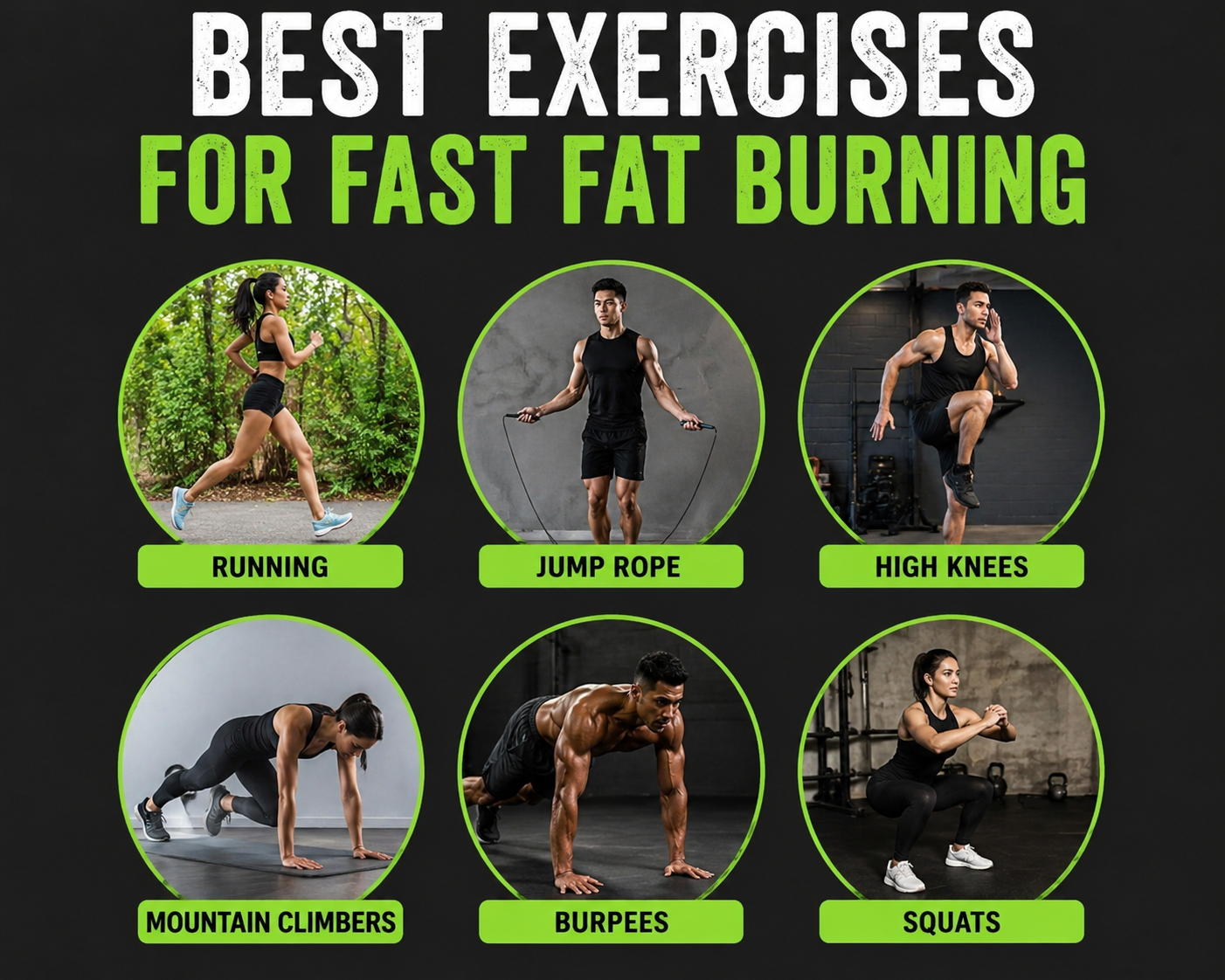
Running is an effective cardio exercise that can burn a significant number of calories. It uses many muscles in the legs and requires your heart and lungs to work harder.
If you are a beginner, start with a combination of walking and light jogging. For example, you can walk for two minutes and jog for one minute. Repeat this pattern several times and slowly increase your running time as your fitness improves.
Regular running can also improve cardiovascular fitness and endurance.
3. Jumping Rope
Jumping rope is a simple exercise that can provide an intense workout in a short period. It works the legs, shoulders, arms, and core while keeping your heart rate elevated.
Beginners can start with short sessions of thirty seconds followed by rest. As coordination improves, you can increase the duration.
Jumping rope can be especially useful for people who want a quick home workout. Make sure you have enough space and use proper footwear to reduce unnecessary stress on your feet and ankles.
4. High Knees
High knees are a simple bodyweight exercise that can increase your heart rate quickly. Stand upright and lift one knee toward your chest while keeping the opposite foot on the floor. Alternate between both legs at a controlled pace.
This exercise works the legs and core while providing a cardio challenge. You can perform high knees for short intervals as part of a fat burning workout.
If the movement feels too intense, slow down and focus on maintaining good form.
5. Burpees
Burpees are one of the most challenging bodyweight exercises for calorie burning. They combine a squat, plank position, and jump into one movement.
Because burpees involve several muscle groups, they can quickly raise your heart rate. However, beginners may find them difficult.
You can modify the exercise by stepping your feet back instead of jumping them back and removing the jump at the end. As your strength and fitness improve, you can gradually perform the full movement.
6. Mountain Climbers
Mountain climbers are another excellent exercise for a fat burning workout. Begin in a high plank position and bring one knee toward your chest. Return it to the starting position and switch legs.
This movement works the core, shoulders, arms, and legs while increasing your heart rate.
Focus on keeping your hips controlled instead of moving them too much from side to side. Good form is more important than performing the exercise as quickly as possible.
7. Squats
Squats are one of the best exercises for strengthening the lower body. They mainly target the thighs, hips, and glutes while also engaging the core.
Although squats are primarily a strength exercise, building muscle can support your overall calorie burning and fitness goals.
Stand with your feet about shoulder width apart. Bend your knees and push your hips backward as if you are sitting on a chair. Keep your chest lifted and return to the standing position.
Once bodyweight squats become easier, you can increase the challenge with variations such as jump squats or weighted squats.
8. Lunges
Lunges are effective for working the legs and glutes. They also challenge your balance and coordination.
Step forward with one leg and lower your body until both knees are comfortably bent. Push through the front foot to return to the starting position and repeat on the other side.
You can perform forward lunges, reverse lunges, or walking lunges. Beginners should focus on controlled movements before increasing speed or adding resistance.
9. Push Ups
Push ups are a classic bodyweight exercise that strengthens the chest, shoulders, arms, and core. They may not burn as many calories as running, but they can help build strength and support a balanced workout routine.
If regular push ups are difficult, perform them with your knees on the floor or with your hands on a stable elevated surface.
As your upper body strength improves, you can gradually progress toward standard push ups.
10. Cycling
Cycling is a great cardio exercise for people who enjoy longer workouts. You can ride outdoors or use a stationary bicycle indoors.
The intensity can be adjusted according to your fitness level. A relaxed ride provides gentle activity, while faster cycling or interval training can create a more demanding workout.
Cycling can also be a useful alternative for people who find running uncomfortable.
11. Swimming
Swimming provides a full body workout because many muscles work together to move your body through the water. It can improve cardiovascular fitness while placing relatively low impact on the joints.
Different swimming strokes can change the muscles involved and the difficulty of the workout.
If you are comfortable in the water, swimming regularly can become an enjoyable part of a fat loss fitness routine.
12. Strength Training
Strength training should not be ignored when your goal is fat loss. Exercises such as squats, lunges, push ups, rows, and presses can help build and maintain muscle.
More muscle does not automatically mean rapid fat loss, but maintaining muscle while losing body fat is important for improving body composition.
A balanced strength training routine two or more times per week can complement cardio workouts and support long term fitness.
13. Stair Climbing
Stair climbing can be a powerful cardio and lower body exercise. Walking or running up stairs requires your legs and glutes to work against gravity, which can make the activity challenging.
Start with a comfortable pace and gradually increase your duration. If you are using stairs outdoors or in a building, pay attention to your surroundings and avoid rushing if you are not accustomed to the activity.
How to Create a Fat Burning Workout
You can combine several of these exercises into a simple workout. For example, begin with five minutes of easy walking to warm up. Then perform squats, mountain climbers, jumping rope, lunges, and high knees.
Perform each exercise for thirty to forty seconds followed by a short rest. Complete two or three rounds depending on your fitness level. Finish with several minutes of easy movement and gentle stretching.
Beginners should start slowly and increase workout intensity over time. Training too hard too soon can increase the risk of excessive soreness and injury.
Diet and Exercise Work Together
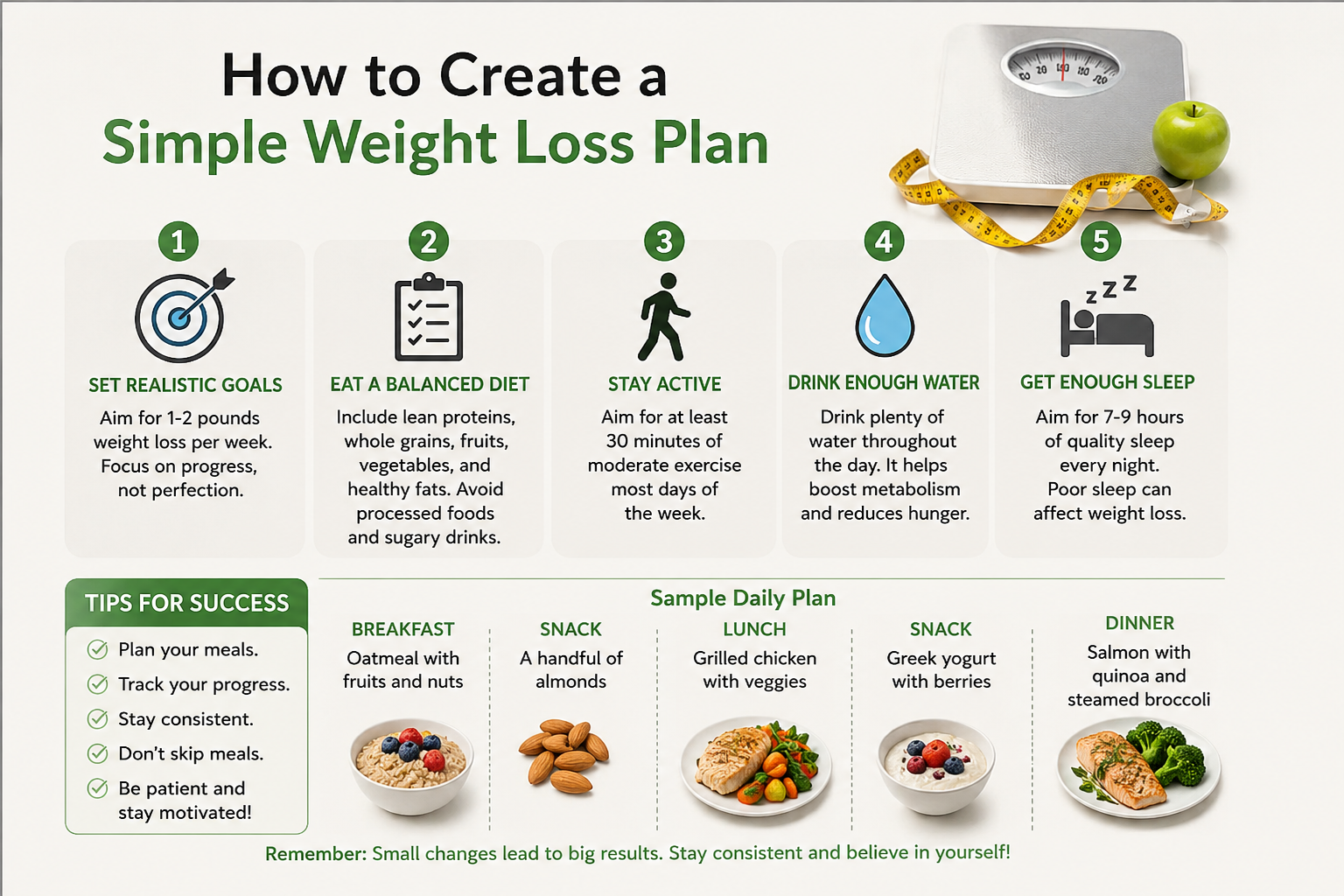
Exercise is only one part of fat loss. Your food choices also have a major influence on your results. Eating vegetables, fruits, lean protein, whole grains, healthy fats, and other nutritious foods can help provide the nutrients your body needs.
Try to limit excessive intake of sugary drinks, highly processed snacks, and foods that are easy to overeat. Drinking enough water and eating adequate protein can also support a healthy fitness routine.
The goal is not to follow an extreme diet. A sustainable eating pattern is usually easier to maintain than a very restrictive plan.
How Often Should You Exercise?
The ideal workout schedule depends on your current fitness level, lifestyle, and goals. A beginner can start with three or four exercise sessions each week and include regular walking on other days.
You can combine cardio with strength training throughout the week. Rest and recovery are also important because your body needs time to adapt to exercise.
Consistency is more important than trying to complete extremely difficult workouts every day.
Final Thoughts
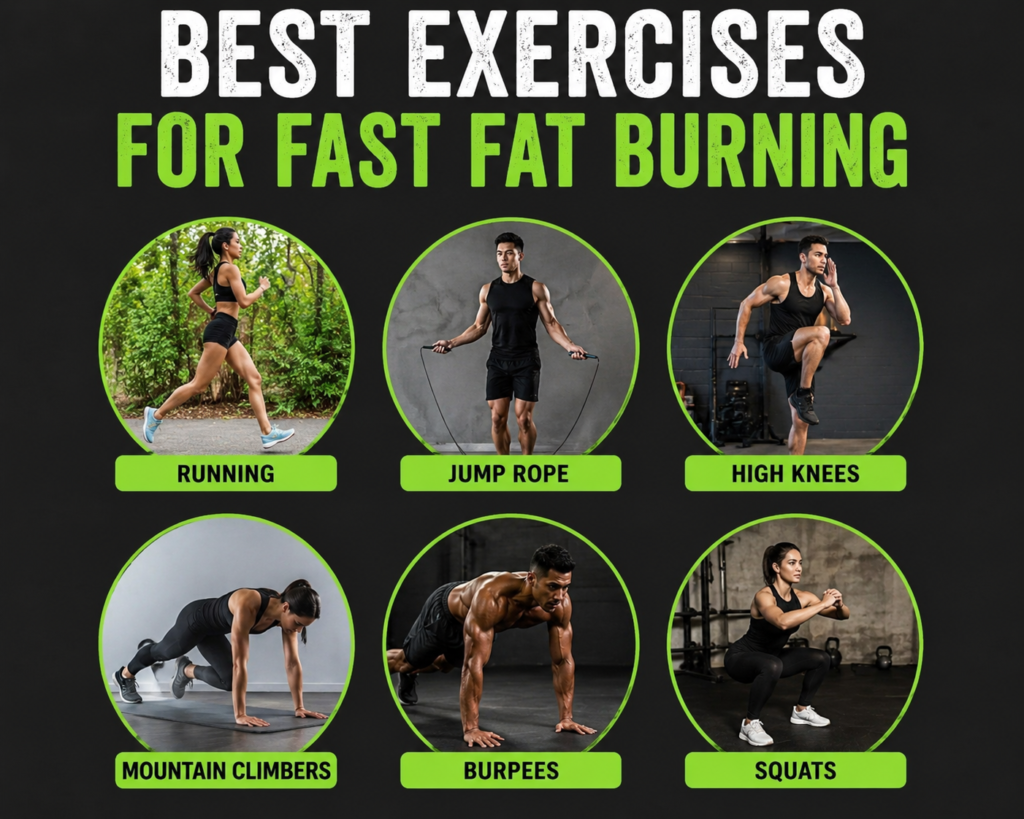
The best exercises for fast fat burning include walking, running, jumping rope, high knees, burpees, mountain climbers, squats, lunges, push ups, cycling, swimming, strength training, and stair climbing. Each exercise offers different benefits, and combining several movements can create an effective fitness routine.
Remember that sustainable fat loss takes time. Exercise can help increase calorie use, improve strength, and support better overall health, but it works best when combined with nutritious eating, proper sleep, recovery, and consistent daily activity.
Choose exercises that match your fitness level and gradually make your workouts more challenging. With patience and regular effort, you can build a stronger, healthier, and more active body.