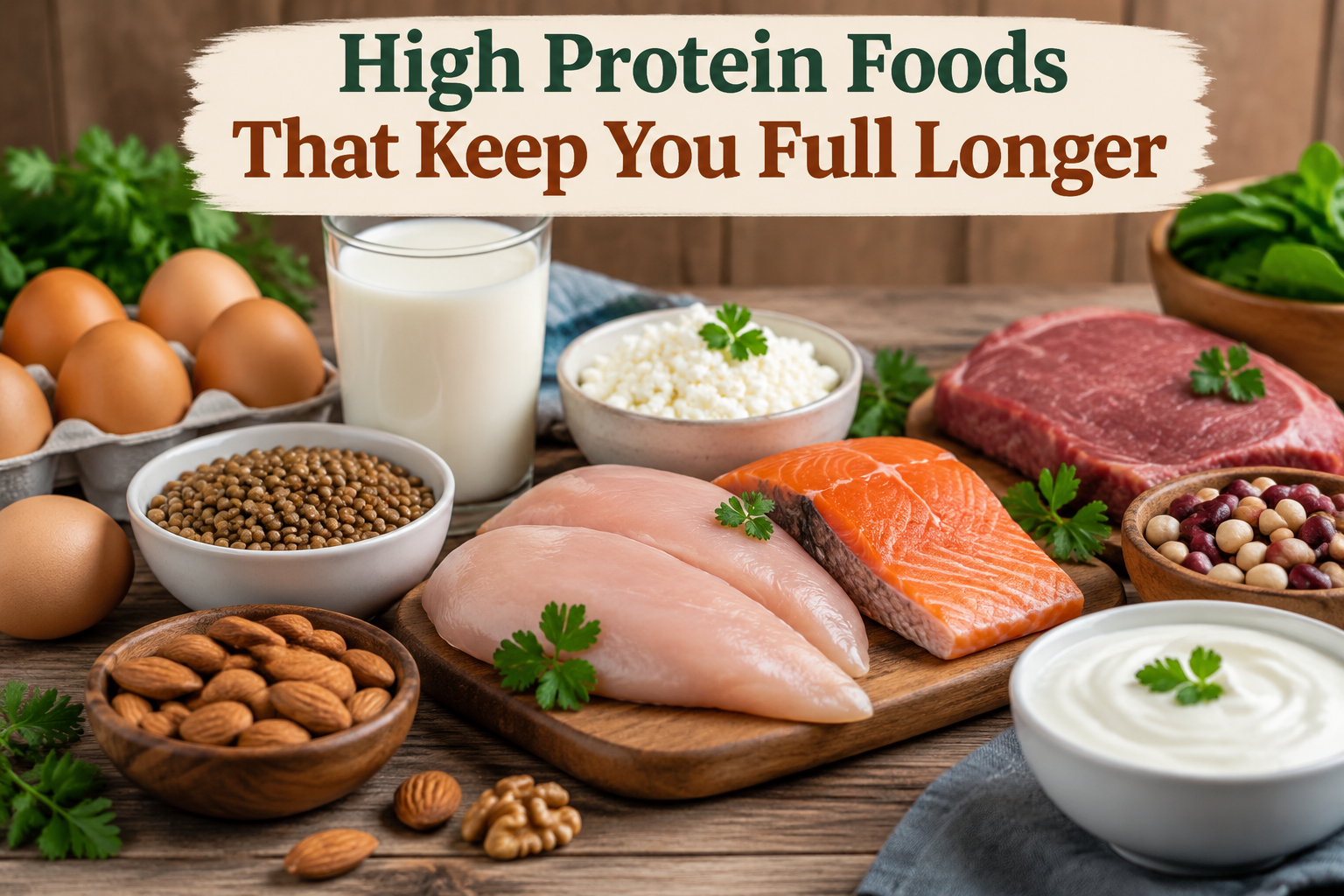
Protein is one of the most important nutrients for a healthy body, especially for people who want to improve fitness, control weight, and maintain muscle strength. Many people struggle with frequent hunger during the day, which makes it difficult to follow a healthy eating routine. Choosing high protein foods that keep you full longer can help control unnecessary cravings and support better health goals.
Protein has a unique role in the body because it takes more time to digest compared to carbohydrates. When we eat protein rich foods, our body feels satisfied for a longer period, which can reduce the desire to eat unhealthy snacks. This is why many fitness experts recommend including quality protein sources in daily meals.
A balanced diet with enough protein can support muscle growth, improve recovery after exercise, and help maintain a healthy body composition. Whether someone is trying to lose weight, build muscle, or simply stay energetic throughout the day, high protein foods can make a big difference.
Why Protein Helps You Stay Full Longer
Protein is known as a filling nutrient because it affects hunger hormones and digestion. When you consume a meal that contains enough protein, your body releases hormones that signal fullness. This helps reduce hunger and prevents overeating.
Foods that are high in protein usually take longer to digest, which means they provide a steady supply of energy. Unlike sugary foods that can cause quick energy increases followed by sudden hunger, protein helps maintain stable energy levels.
For people focused on weight control, adding protein to meals can be a simple way to manage appetite. A breakfast with protein, for example, can help you avoid unnecessary eating before lunch.
Eggs: A Complete Protein Source
Eggs are among the best high protein foods that keep you full longer. They are affordable, easy to prepare, and packed with essential nutrients. One large egg contains high quality protein along with important vitamins and minerals.
Eggs are especially popular among fitness lovers because they contain all essential amino acids needed by the body. Eating eggs in breakfast can help reduce hunger throughout the morning and provide energy for daily activities.
You can enjoy eggs in many ways, including boiled eggs, scrambled eggs, or omelets with vegetables. Adding vegetables to eggs creates a balanced meal with protein, fiber, and important nutrients.
Chicken Breast for Lean Protein
Chicken breast is one of the most popular protein foods for people who exercise and follow fitness diets. It is rich in protein and contains relatively low amounts of fat, making it a great choice for muscle building and weight management.
A meal containing chicken breast can keep you satisfied for several hours because of its high protein content. It helps support muscle repair after workouts and provides the body with essential nutrients.
Grilled chicken, baked chicken, or boiled chicken can be healthy choices. Avoiding excessive oil and heavy sauces can make chicken meals more suitable for fitness goals.
Fish for Protein and Healthy Fats
Fish is another excellent source of protein that helps maintain fullness. Different types of fish provide high quality protein along with healthy fats such as omega 3 fatty acids.
Salmon, tuna, and other fish varieties can support heart health, brain function, and overall fitness. The combination of protein and healthy fats makes fish a satisfying food choice.
Including fish in your weekly diet can provide variety and prevent your meals from becoming boring. It can be prepared through grilling, baking, or cooking with healthy ingredients.
Greek Yogurt for a Protein Rich Snack
Greek yogurt is a convenient high protein food that can help control hunger between meals. Compared to regular yogurt, Greek yogurt usually contains more protein and provides a creamy texture.
It can be eaten as a quick snack or combined with fruits, nuts, and seeds for a nutritious meal. The protein in Greek yogurt helps keep you satisfied while supporting muscle health.
Choosing plain Greek yogurt instead of heavily sweetened versions is a better option because it reduces added sugar intake.
Cottage Cheese for Long Lasting Fullness
Cottage cheese is a protein rich dairy food that many people include in fitness diets. It contains a slow digesting protein called casein, which provides a gradual release of amino acids.
Because of its slow digestion, cottage cheese can help you feel full for a longer time. It is especially useful as an evening snack because it provides protein without requiring heavy meals.
You can combine cottage cheese with fruits, vegetables, or nuts to create a balanced and satisfying dish.
Lean Beef for Strength and Energy
Lean beef is a nutrient rich protein source that provides important nutrients such as iron, zinc, and vitamin B12. These nutrients support energy production and overall body function.
For people interested in muscle growth and strength training, lean beef can be a valuable addition to the diet. Its protein content helps repair muscles and supports recovery.
Choosing lean cuts and using healthy cooking methods can make beef a part of a balanced fitness diet.
Lentils and Beans for Plant Based Protein
Plant based protein sources are also excellent choices for staying full longer. Lentils, beans, and chickpeas provide protein along with fiber, which makes them very satisfying.
Fiber slows digestion and helps maintain fullness. When protein and fiber are combined, they create a powerful combination for appetite control.
Lentils and beans are affordable foods that can easily be included in daily meals. They can be added to soups, salads, rice dishes, and many traditional recipes.
Nuts and Seeds for Protein and Healthy Fats
Nuts and seeds are small foods with powerful nutritional benefits. Almonds, peanuts, chia seeds, and pumpkin seeds contain protein, healthy fats, and minerals.
Because they are rich in nutrients, a small amount of nuts can help reduce hunger between meals. They are a convenient snack option for busy people.
However, nuts are calorie dense, so portion control is important. Eating a moderate amount can provide benefits without adding excessive calories.
Turkey as a Lean Protein Option
Turkey is another excellent protein source that can support fitness and healthy eating goals. It is naturally high in protein and can help maintain muscle mass.
Turkey meals can be a great alternative for people who want variety in their protein sources. It can be grilled, roasted, or added to healthy sandwiches and salads.
Like chicken, choosing lean turkey options helps keep meals nutritious and suitable for weight management.
Protein Smoothies for Convenience
Protein smoothies are popular among athletes and busy individuals because they are quick and easy to prepare. They can provide a good amount of protein when whole food options are not available.
A smoothie made with protein powder, milk, yogurt, fruits, and seeds can become a filling meal replacement or post workout drink.
However, whole foods should still remain the foundation of a healthy diet because they provide additional nutrients and benefits.
Tofu and Soy Products for Plant Protein
Tofu and other soy based foods are valuable protein sources, especially for people following vegetarian diets. They contain plant based protein that supports muscle health and overall nutrition.
Tofu can absorb different flavors, making it easy to include in various recipes. It can be cooked with vegetables, added to soups, or used as a replacement for meat in some dishes.
How Much Protein Do You Need Daily?
Protein needs vary depending on age, activity level, fitness goals, and overall health. People who exercise regularly usually need more protein compared to those with a less active lifestyle.
A balanced approach is important because the body needs carbohydrates, healthy fats, vitamins, and minerals along with protein. Eating a variety of protein sources can help meet nutritional needs.
Instead of focusing only on one food, it is better to include different protein rich foods throughout the day.
Best Time to Eat Protein
There is no single perfect time to eat protein, but spreading protein intake across meals can be beneficial. Having protein during breakfast, lunch, dinner, and snacks can help maintain steady energy.
Eating protein after exercise can support muscle recovery, while protein at breakfast can help control hunger during the day.
Consistency is more important than focusing only on timing.
Tips to Add More Protein to Your Diet
Adding more protein does not have to be complicated. Simple changes can increase daily protein intake.
Start your day with eggs, yogurt, or another protein rich breakfast. Add chicken, fish, beef, lentils, or beans to lunch and dinner meals. Keep healthy protein snacks available for busy times.
Combining protein with vegetables and whole grains creates balanced meals that support fitness and overall health.
Conclusion
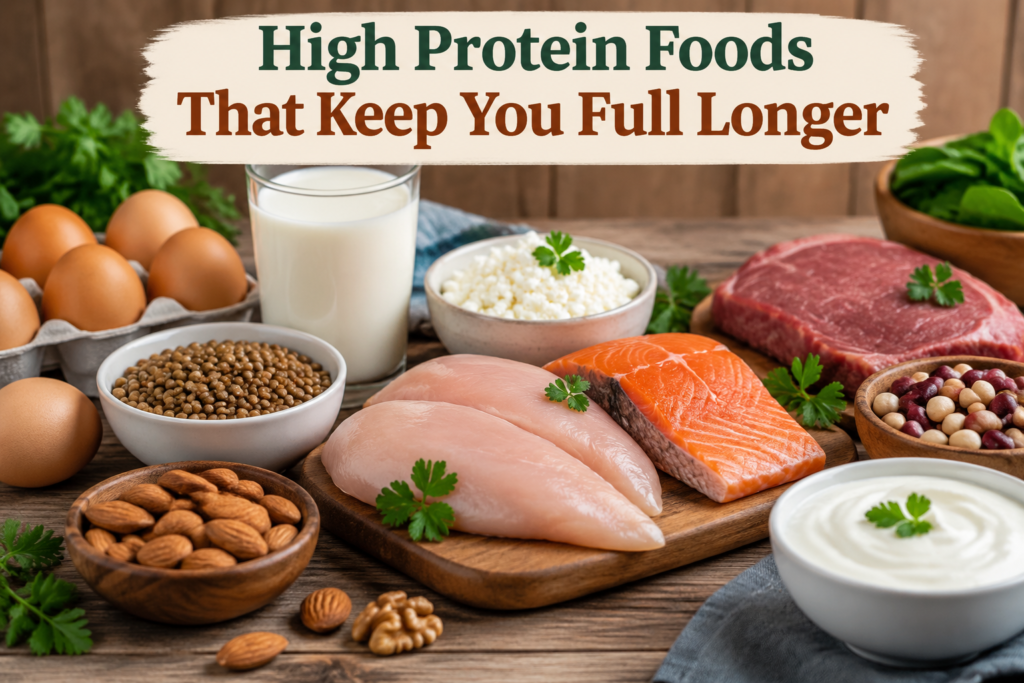
High protein foods that keep you full longer are an important part of a healthy lifestyle. Foods such as eggs, chicken breast, fish, Greek yogurt, lean beef, lentils, beans, nuts, and tofu can help control hunger while supporting muscle growth and energy levels.
Protein does more than build muscles. It helps maintain fullness, supports recovery, and makes it easier to follow a balanced diet. By including different protein sources in daily meals, you can improve your nutrition and move closer to your fitness goals.
A healthy diet is not about extreme restrictions. It is about making smart food choices that provide your body with the nutrients it needs. Adding more high protein foods to your routine can be a simple and effective step toward better health, improved fitness, and long term wellness.