Beef and mutton are among the most popular sources of protein around the world. They are commonly used in traditional meals, fitness diets, and family cooking because they provide essential nutrients that support strength, energy, and overall health. However, the way these meats are cooked can greatly affect their nutritional value. Choosing healthy cooking methods for beef and mutton helps reduce unnecessary fat, preserve important nutrients, and create meals that support a balanced lifestyle.
Many people think that red meat is unhealthy, but the reality is that the quality of meat and the cooking method play an important role. Lean cuts of beef and mutton can be part of a healthy diet when prepared properly. Cooking techniques such as grilling, baking, slow cooking, steaming, and pressure cooking can make meat easier to digest while keeping its natural flavor.
Understanding how to cook beef and mutton in a healthier way allows you to enjoy delicious meals without compromising your fitness goals or daily nutrition needs.
Why Cooking Method Matters for Beef and Mutton
The cooking method can change the amount of fat, calories, and nutrients in meat. Some cooking techniques require large amounts of oil, which can increase calorie intake and make the meal heavier. On the other hand, healthier cooking methods allow the natural taste of beef and mutton to develop while maintaining their nutritional benefits.
Beef and mutton contain high quality protein, iron, zinc, vitamin B12, and other important nutrients. Protein helps repair muscles and supports growth, while iron helps transport oxygen throughout the body. Vitamin B12 supports nerve health and energy production.
When meat is cooked at extremely high temperatures for long periods, some unwanted compounds may form. Therefore, using balanced cooking methods and avoiding excessive burning or charring is important for maintaining a healthy diet.
Grilling Beef and Mutton for a Healthy Meal
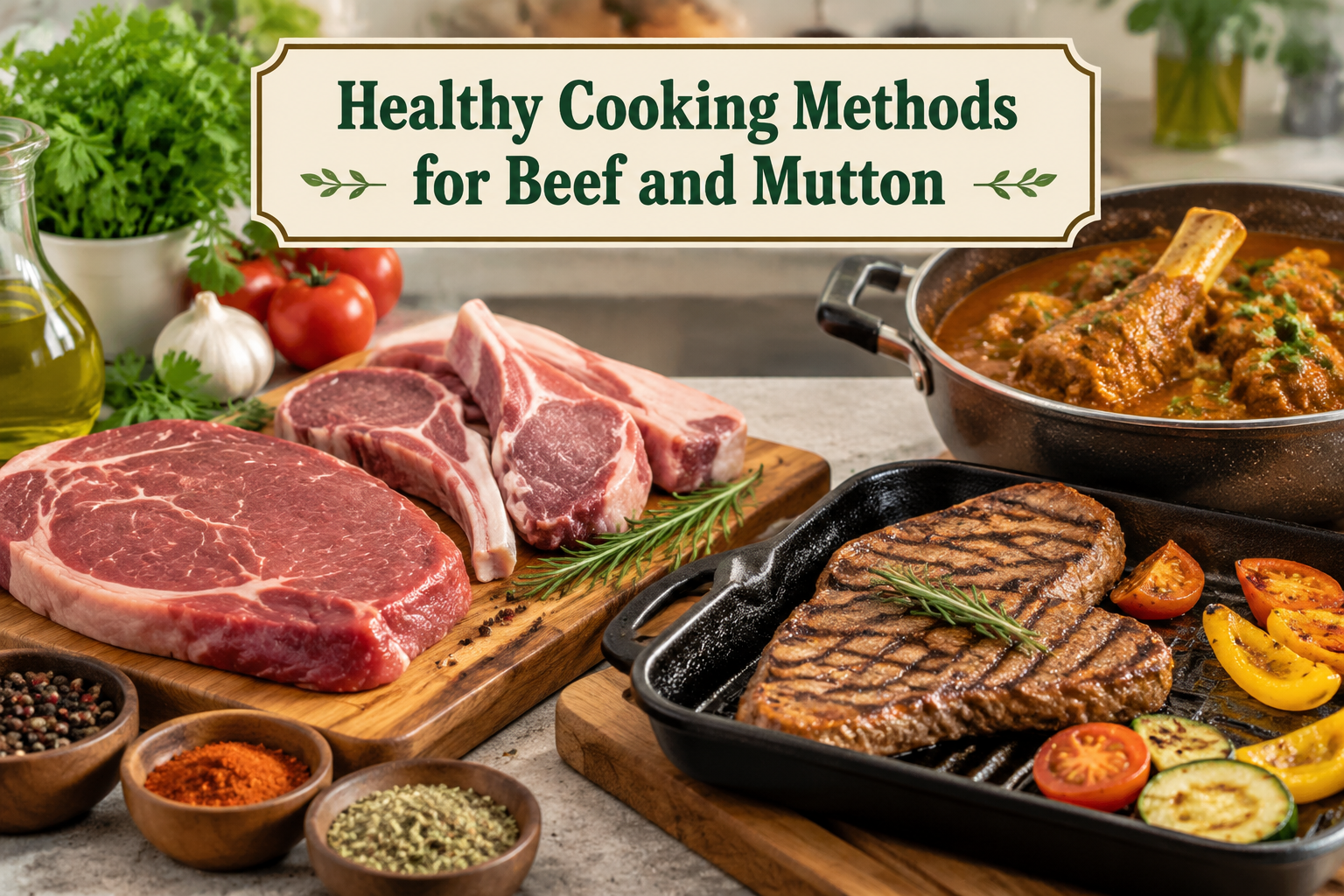
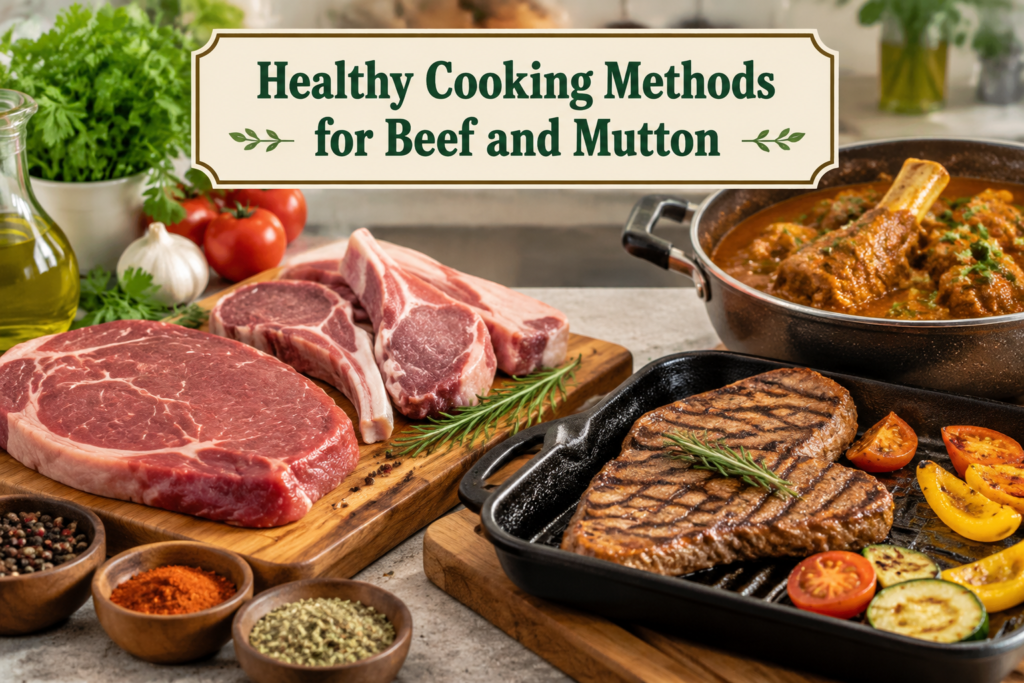
Grilling is one of the most popular healthy cooking methods for beef and mutton. It allows excess fat to drip away from the meat instead of staying inside the dish. Grilled meat also develops a rich flavor without requiring large amounts of oil.
For healthier grilling, choose lean cuts of beef and mutton. Remove visible fat before cooking and use herbs, spices, garlic, lemon juice, and natural marinades instead of heavy sauces. These ingredients improve flavor while adding extra nutritional benefits.
It is important to avoid burning the surface of meat while grilling. Cooking meat until it is properly done while preventing excessive charring helps create a safer and healthier meal.
Grilled beef steaks, mutton chops, and kebabs can be excellent options when combined with vegetables, salads, and whole grains. This creates a balanced plate that provides protein, fiber, vitamins, and minerals.
Baking Beef and Mutton for Better Nutrition
Baking is another healthy way to prepare beef and mutton. This method uses dry heat inside an oven and usually requires little or no added oil. Baking allows meat to cook slowly and evenly, which helps maintain moisture and flavor.
Roasted beef or baked mutton can be prepared with vegetables such as carrots, onions, potatoes, and peppers. This combination creates a complete meal with protein, carbohydrates, and essential nutrients.
Using natural seasonings such as black pepper, rosemary, turmeric, ginger, and garlic can improve taste without adding unnecessary calories. Baking is especially useful for people who want convenient meal preparation because larger portions can be cooked at once and stored for later use.
Slow Cooking for Tender and Healthy Meat
Slow cooking is one of the best methods for tougher cuts of beef and mutton. This technique involves cooking meat at a low temperature for several hours, allowing the fibers to become soft and easy to chew.
Slow cooking helps maintain the natural juices of meat and reduces the need for extra oil. It is a great choice for preparing healthy stews and soups.
Mutton and beef slow cooked with vegetables, beans, and spices can provide a nutrient rich meal. The long cooking process allows flavors to combine naturally, making the dish satisfying and enjoyable.
This cooking method is also beneficial for families because it allows the preparation of large meals with simple ingredients. A healthy slow cooked beef or mutton dish can provide balanced nutrition for several people.
Pressure Cooking Beef and Mutton
Pressure cooking is a time saving and healthy method for preparing red meat. It uses steam and pressure to cook meat quickly while keeping it tender. This method is especially common in many Asian and South Asian kitchens.
Pressure cooking requires less oil compared to traditional frying methods. Beef and mutton cooked with vegetables, lentils, and spices can become a nutritious meal full of flavor.
This method also helps soften tougher meat cuts, making them easier to digest. For busy people, pressure cooking is an excellent option because it reduces cooking time without sacrificing taste.
Healthy dishes such as beef curry, mutton stew, and meat soups can be prepared using a pressure cooker with controlled amounts of oil and salt.
Steaming Meat for a Light Meal
Steaming is usually associated with vegetables and seafood, but it can also be used as part of healthy meat preparation. This method does not require added oil and helps maintain the natural nutrients of food.
Steamed or partially steamed meat can be combined with vegetables and light sauces to create a balanced meal. Although steaming may not provide the same roasted flavor as grilling or baking, it is a useful method for people who want lower calorie meals.
For fitness focused individuals, steamed meat with vegetables can be a simple way to increase protein intake while keeping meals light.
Healthy Marination Techniques for Beef and Mutton
Marination plays an important role in preparing flavorful and healthy meat. A good marinade can improve tenderness and reduce the need for unhealthy sauces.
Healthy marinades can include yogurt, lemon juice, garlic, ginger, herbs, and spices. These ingredients add flavor and help soften the meat naturally.
Avoid using marinades that contain excessive sugar, processed sauces, or large amounts of salt. Natural ingredients are a better choice for people who want to maintain a healthy eating pattern.
Marinated beef or mutton can then be grilled, baked, or cooked slowly for a nutritious meal.
Choosing Healthier Cuts of Beef and Mutton
The choice of meat cut is just as important as the cooking method. Lean cuts contain less visible fat and are better choices for people focusing on fitness and weight management.
When buying beef or mutton, look for cuts with moderate fat content. Removing extra fat before cooking can reduce unnecessary calories.
For beef, lean options may include certain cuts from the round or loin areas. For mutton, choosing pieces with less visible fat and trimming excess fat can make meals healthier.
Eating a variety of protein sources, including poultry, fish, eggs, and plant based foods, can also help create a balanced diet.
Using Less Oil While Cooking Red Meat
One of the easiest ways to make beef and mutton healthier is reducing the amount of oil used during cooking. Many traditional recipes use more oil than necessary, which increases calories without adding nutritional value.
Using non stick cookware, slow cooking methods, and natural moisture from vegetables can reduce the need for extra oil.
Healthy fats from sources such as olive oil, nuts, and seeds can be included in moderation. The goal is not to remove all fats but to maintain a balanced intake.
Pairing Beef and Mutton With Healthy Foods
A healthy meat meal should not focus only on protein. Combining beef and mutton with nutrient rich foods improves overall nutrition.
Vegetables provide fiber, vitamins, and minerals that support digestion and general health. Whole grains provide energy, while salads add freshness and important nutrients.
For example, grilled beef with vegetables, baked mutton with brown rice, or slow cooked meat with beans can create balanced meals.
A balanced plate helps the body receive different nutrients instead of depending on only one food group.
Common Mistakes When Cooking Beef and Mutton
Many people make cooking mistakes that reduce the health benefits of red meat. Deep frying meat, using excessive oil, adding too much salt, and overcooking until the meat becomes burnt can make meals less healthy.
Another common mistake is eating large portions of red meat too frequently. Portion control is important because even healthy foods should be consumed in suitable amounts.
Choosing better cooking methods and maintaining variety in the diet can help people enjoy beef and mutton as part of a healthy lifestyle.
Conclusion
Healthy cooking methods for beef and mutton allow you to enjoy the taste and nutritional benefits of red meat while supporting a balanced diet. Methods such as grilling, baking, slow cooking, pressure cooking, and steaming can improve the quality of meat dishes by reducing unnecessary fats and preserving important nutrients.
The key to healthy beef and mutton preparation is choosing quality cuts, using natural ingredients, controlling oil, and combining meat with vegetables and whole foods. When prepared correctly, beef and mutton can provide valuable protein, minerals, and energy for active people and fitness lovers.
A healthy lifestyle does not require completely avoiding favorite foods. Instead, making smarter cooking choices helps create meals that are nutritious, enjoyable, and suitable for long term health.