Good digestion is one of the most important parts of a healthy lifestyle. Many people focus on protein, vitamins, and calories but forget about dietary fiber, which plays a major role in keeping the digestive system active and balanced. A diet rich in high fiber vegetables can support regular bowel movements, improve gut health, reduce digestive discomfort, and help the body absorb nutrients more effectively.
Vegetables are one of the best natural sources of fiber because they provide a combination of soluble and insoluble fiber along with vitamins, minerals, and plant compounds. Soluble fiber helps form a soft gel like substance in the digestive system, while insoluble fiber adds bulk to stool and helps food move smoothly through the intestines.
Including the best high fiber vegetables in your daily meals is a simple way to improve digestion naturally. Whether you want to manage constipation, maintain a healthy weight, or support overall wellness, fiber rich vegetables can make a noticeable difference.
Why Fiber Is Important for Better Digestion
Fiber is a type of carbohydrate that the body cannot fully digest. Instead of being broken down and absorbed like other nutrients, fiber travels through the digestive tract and supports different important processes.
One of the biggest benefits of fiber is that it helps prevent constipation. When you consume enough fiber and drink enough water, fiber absorbs moisture and creates softer stools that are easier to pass. This supports a healthy bowel routine and reduces the feeling of heaviness.
Fiber also feeds beneficial bacteria in the gut. These friendly bacteria help maintain a balanced digestive environment and support the natural functions of the intestines. A healthy gut microbiome is connected with better digestion, stronger immunity, and improved overall health.
High fiber vegetables can also help control hunger because fiber slows digestion and keeps you feeling full for longer. This can support healthy eating habits and prevent unnecessary snacking.
Broccoli: A Powerful Fiber Rich Vegetable
Broccoli is one of the most popular high fiber vegetables for better digestion. It contains both soluble and insoluble fiber, making it helpful for maintaining regular bowel movements.
The fiber in broccoli supports the movement of food through the digestive system and helps keep the intestines active. It also contains antioxidants and important nutrients such as vitamin C, vitamin K, and folate.
Broccoli can be added to many meals including salads, soups, stir fried dishes, and healthy side dishes. Cooking broccoli lightly can make it easier to digest while preserving many of its nutrients.
For people looking to improve gut health naturally, broccoli is an excellent vegetable choice.
Carrots Support Healthy Digestion
Carrots are another excellent source of dietary fiber. They are rich in soluble fiber, which can help maintain a healthy balance in the digestive system.
The fiber in carrots helps slow digestion and supports stable movement through the intestines. Carrots also contain beta carotene, which the body converts into vitamin A. This nutrient supports healthy body tissues, including the lining of the digestive tract.
Raw carrots make a convenient snack, while cooked carrots can be added to soups, rice dishes, and vegetable meals. Their natural sweetness makes them easy to include in a balanced diet.
Spinach for Gut Health and Nutrition
Spinach is a nutrient dense leafy green vegetable that provides a good amount of fiber with very few calories. It contains insoluble fiber, which helps increase stool bulk and supports regular digestion.
Eating spinach regularly can contribute to a healthier digestive system because it provides essential minerals like magnesium and potassium along with plant compounds that support overall wellness.
Spinach can be used in salads, smoothies, omelets, soups, and cooked meals. Adding leafy greens like spinach to your diet is one of the easiest ways to increase daily fiber intake.
Sweet Potatoes Improve Digestive Function
Sweet potatoes are not only a great source of energy but also a valuable high fiber vegetable for digestion. They contain both types of fiber that support digestive health.
The fiber in sweet potatoes helps improve bowel regularity and supports beneficial gut bacteria. They also contain complex carbohydrates that provide long lasting energy.
Many fitness lovers and active people include sweet potatoes in their meals because they support energy needs while also providing digestive benefits.
You can enjoy sweet potatoes baked, boiled, or roasted as part of a healthy meal.
Brussels Sprouts for Better Gut Balance
Brussels sprouts are small vegetables packed with fiber and nutrients. They are especially useful for people who want to improve digestion through natural foods.
The fiber content helps maintain regular bowel movements and supports healthy bacteria in the gut. Brussels sprouts also contain antioxidants that help protect body cells from damage.
They can be roasted, steamed, or added to vegetable dishes. Including different fiber rich vegetables like Brussels sprouts creates variety in your diet and supports better nutrition.
Green Peas Are a Good Fiber Source
Green peas are often considered a vegetable, although they are technically legumes. They are an excellent source of fiber and provide plant based protein as well.
The fiber in green peas supports digestion by helping food move through the digestive system. Their combination of fiber and protein can also help you feel satisfied after meals.
Green peas can be added to soups, rice dishes, salads, and many traditional meals. They are affordable, easy to prepare, and widely available.
Artichokes Contain High Amounts of Fiber
Artichokes are among the vegetables with one of the highest fiber contents. They provide a significant amount of fiber that supports digestive health.
The fiber in artichokes helps improve bowel movement and supports the growth of healthy gut bacteria. They also contain natural plant compounds that contribute to overall wellness.
Although artichokes are not common in every kitchen, they can be a valuable addition to a fiber focused diet.
Cauliflower Supports a Healthy Digestive System
Cauliflower is a versatile vegetable that provides fiber along with vitamins and minerals. It is often used as a healthy alternative to higher calorie foods.
The fiber in cauliflower helps support regular digestion and promotes a feeling of fullness. It can be used in many recipes including soups, roasted vegetable dishes, and healthy rice alternatives.
Adding cauliflower to your meals can increase your vegetable intake while supporting better digestion.
Beetroot for Natural Fiber and Gut Support
Beetroot is a colorful vegetable that provides fiber, antioxidants, and essential nutrients. Its natural fiber content supports healthy digestion and regular bowel movements.
Beetroot can be eaten boiled, roasted, or added to salads and juices. Its natural compounds also make it a popular choice among people who want to improve their overall nutrition.
Including colorful vegetables like beetroot helps create a more balanced and fiber rich diet.
How Much Fiber Do You Need Daily?
The amount of fiber a person needs depends on age, gender, and lifestyle. In general, adults should aim for around 25 to 35 grams of fiber per day.
Many people do not get enough fiber because their diets contain too many processed foods and not enough vegetables, fruits, and whole foods.
Increasing fiber intake should be done gradually. Suddenly eating large amounts of fiber may cause gas or bloating, especially if your body is not used to it. Drinking enough water is also important because fiber works best when combined with proper hydration.
Tips to Add More High Fiber Vegetables to Your Diet
Adding more fiber rich vegetables does not have to be difficult. Small changes can create big improvements over time.
Start your day with vegetables in breakfast meals such as spinach omelets or vegetable sandwiches. Add a salad with lunch and include cooked vegetables with dinner.
Try mixing different vegetables together instead of eating the same options every day. A variety of vegetables provides different types of fiber and nutrients.
Soups are also an excellent way to increase vegetable intake because they allow you to combine many fiber rich ingredients in one meal.
Common Mistakes When Increasing Fiber Intake
Many people increase fiber too quickly and experience bloating, gas, or discomfort. The digestive system needs time to adjust.
Another common mistake is eating more fiber without drinking enough water. Fiber needs water to move smoothly through the digestive tract.
It is also important to choose natural fiber sources like vegetables instead of depending only on processed fiber products. Whole foods provide additional nutrients that support overall health.
Final Thoughts on High Fiber Vegetables for Better Digestion
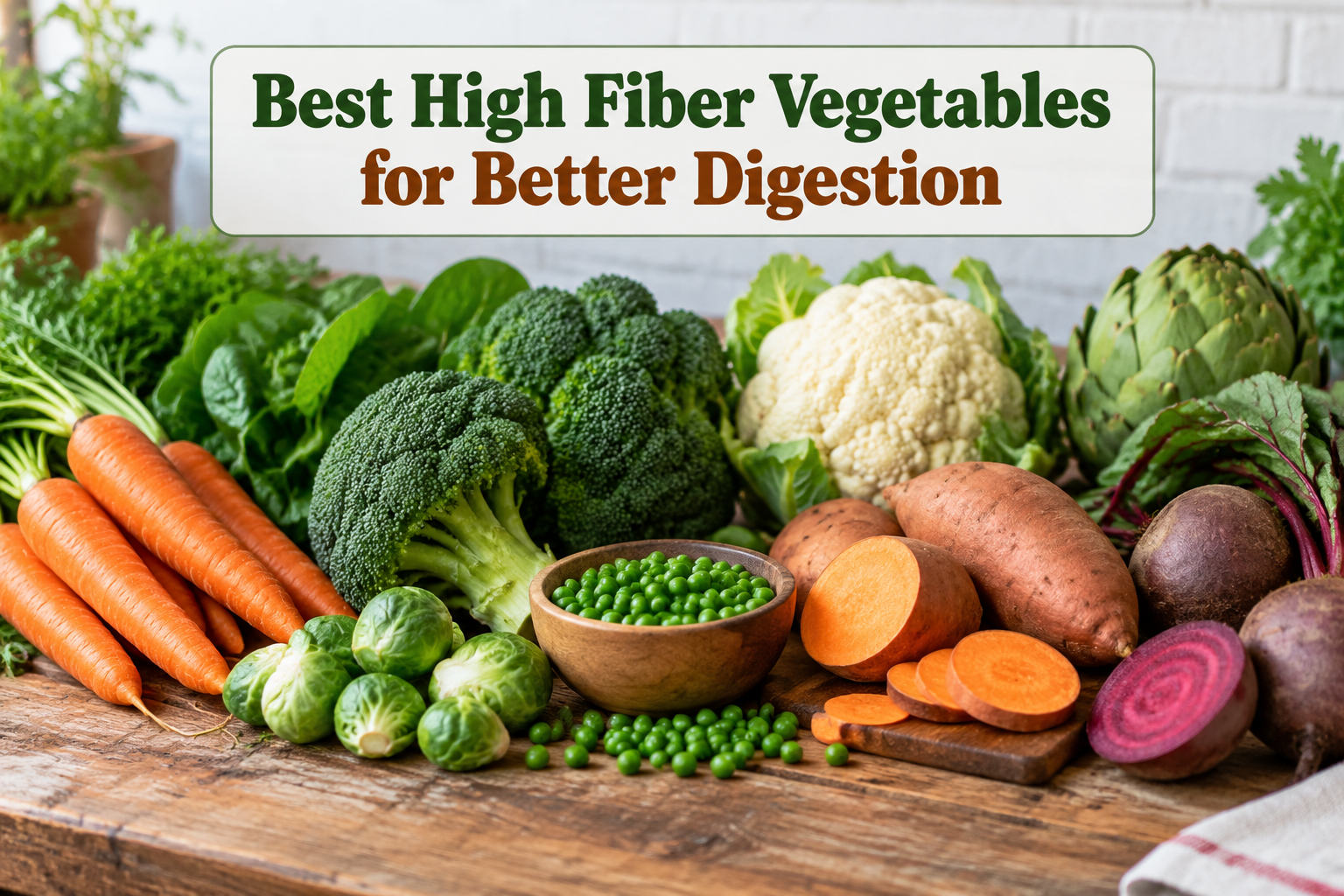
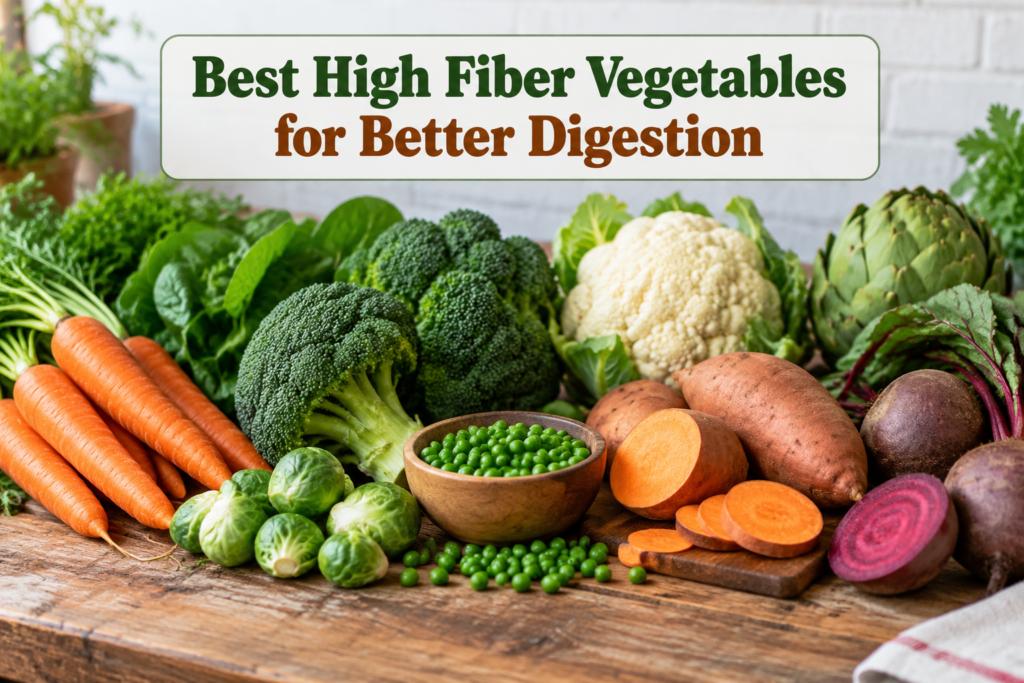
High fiber vegetables are among the best foods for supporting a healthy digestive system. Vegetables like broccoli, carrots, spinach, sweet potatoes, Brussels sprouts, green peas, cauliflower, and beetroot provide natural fiber that helps maintain regular digestion and supports gut health.
A balanced diet that includes a variety of vegetables can improve digestion, increase energy levels, and support a healthier lifestyle. The key is to make fiber rich vegetables a regular part of your meals while maintaining proper hydration.
Better digestion begins with simple daily choices. By adding more high fiber vegetables to your plate, you can give your body the natural support it needs for a stronger and healthier digestive system.